Wading Safety: The Discipline That Keeps You Fishing
Wading belts, staffs, felt vs rubber, and the self-rescue skills every angler should know before wading deep.
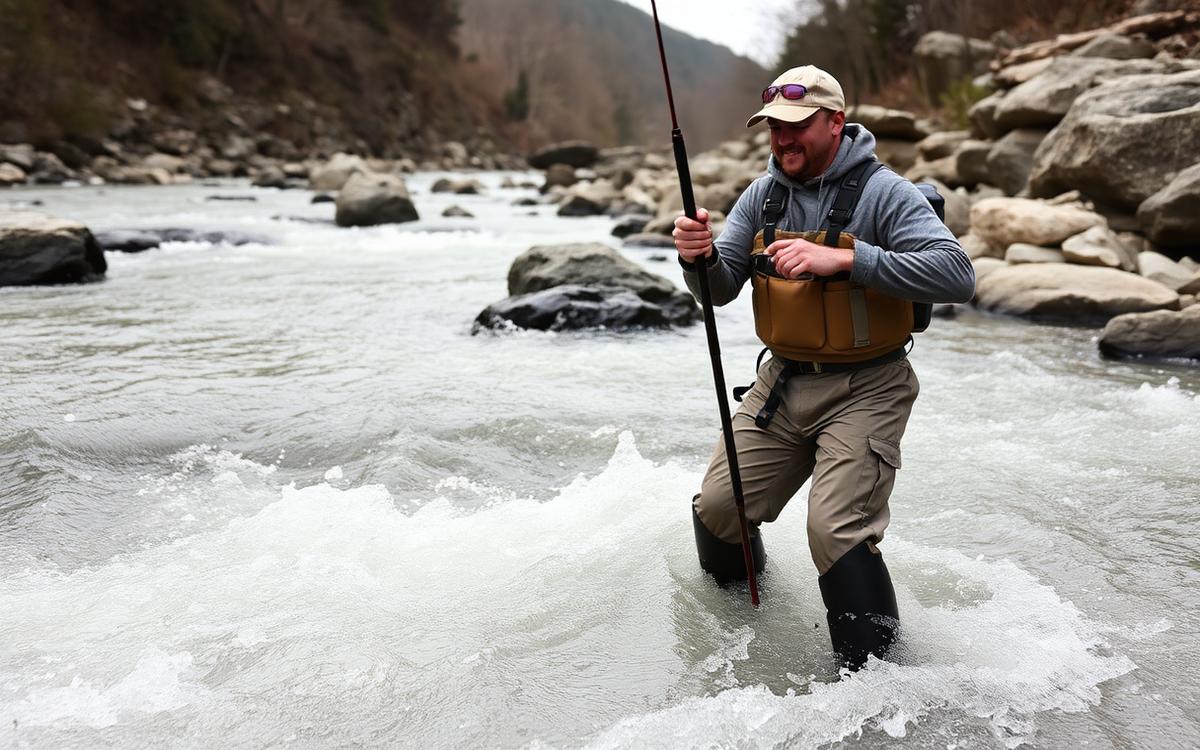
Drowning is the leading cause of angler death, and nearly all incidents are preventable with basic equipment, self-rescue technique, and honest assessment of water conditions.
Drowning is the single largest cause of angler death on trout water, and nearly every incident is preventable. Wading safety is unglamorous, but it is the discipline that keeps you fishing into old age instead of ending a season early — or permanently.
Wear a wading belt, always
A wading belt cinched tight over your waders is non-negotiable. If you fall in without one, waders fill with water instantly and drag you down. With a tight belt, waders trap air, provide buoyancy, and give you time to right yourself. This is the single most important piece of wading safety equipment.
The wading staff earns its weight
A collapsible wading staff — Folstaf, Simms, or a repurposed ski pole — provides a third point of contact and dramatically reduces the risk of losing balance in current. On unfamiliar or heavy water, it is required equipment, not optional. Attach it to your wading belt with a retractor so it is always in reach.
Studded boots vs felt vs rubber
Felt soles grip slick stones best but transport invasive species between watersheds and are banned in some states. Rubber soles with metal studs (Simms G4 Boa, Korkers with interchangeable soles) offer nearly equivalent grip and are the modern standard. Never wade with worn-smooth boot soles — the traction difference is dramatic.
Read the current before you enter
Water above mid-thigh moving faster than a slow walking pace is at the edge of safe wading for most people. Water above waist depth in any current is dangerous. Always scout a crossing from the bank, identify your exit point on the far side, and enter at an angle downstream so the current works with you instead of against you.
If you fall
Do not try to stand up. Lift your feet, point them downstream, and float on your back with feet first — the whitewater rafting swim position. This keeps your head clear of rocks and lets your feet fend off obstacles. Backstroke or paddle at an angle to the near bank. Fighting the current standing up is how anglers get swept and pinned.
Cold water is a separate threat
Water below 60°F causes rapid heat loss and impaired coordination within minutes. Cold shock in water below 50°F can trigger involuntary gasping and cardiac arrest. Wear a fleece wading layer under your waders in cold months, carry a dry change of clothes in your vehicle, and shorten trips in early and late season when water is coldest.
Solo vs partner fishing
Solo fishing is a treasured part of the sport, but takes on unavoidable risk. If you fish solo, always leave a written plan with someone — river, access point, expected return time. Carry a satellite communicator (Garmin inReach, ZOLEO) on remote water. Cell coverage on productive trout streams is often absent.
The unexpected obstacles
Undercut banks that collapse, submerged logs that snag your feet, sudden drop-offs that appear at low water, and rising flows from upstream dam releases have all killed anglers who did not respect them. Local knowledge of a river's specific hazards is irreplaceable — ask at the fly shop before wading unfamiliar water.
A dead angler catches no fish. The point of wading safety is not caution for its own sake — it is the discipline that keeps you on the water for another forty years.
Practice the feet-first floating swim position in a controlled setting — a pool or calm slow river — before you need it in fast water.
Frequently Asked
- Are felt soles still legal?
- Banned in some states (Maryland, Alaska, others) to prevent invasive species transfer. Check local regulations.
- How tight should a wading belt be?
- Snug enough that you cannot slip a fist between belt and waders. It must actually seal to trap air.
- What water depth is dangerous?
- Mid-thigh in moderate current, waist in gentle current. Beyond these, risk climbs rapidly for most anglers.
- Do I really need a wading staff?
- On any unfamiliar water, on any river above knee-deep with real current — yes. It is inexpensive insurance.