Your First Fly Fishing Outfit: A Practical Beginner's Guide
The essential rod, reel, line and leader logic every new fly angler needs before their first day on the water.
Fly fishing traces back nearly two thousand years to Macedonian anglers who wrapped hooks in red wool. The modern sport is a chain of connected components — rod, reel, line, leader — that all beginners must understand as one system rather than isolated purchases.
Fly fishing looks intimidating from the outside — the long rod, the looping line, the small feathered flies — but the underlying idea is refreshingly simple. Instead of casting a heavy lure that pulls a light line, you cast a heavy line that carries a nearly weightless fly. Once you accept that inversion, every piece of gear starts to make sense, and the sport opens up faster than most beginners expect.
Understand the four-piece system
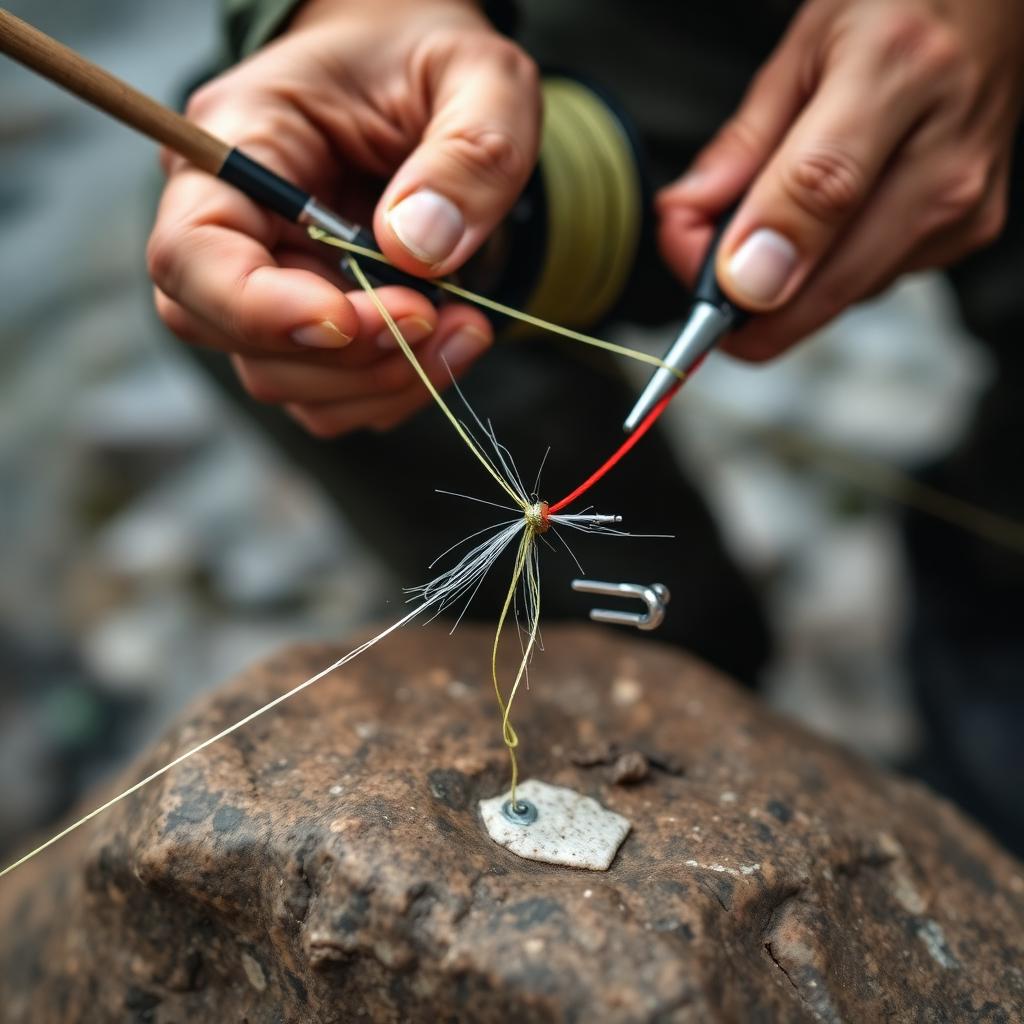
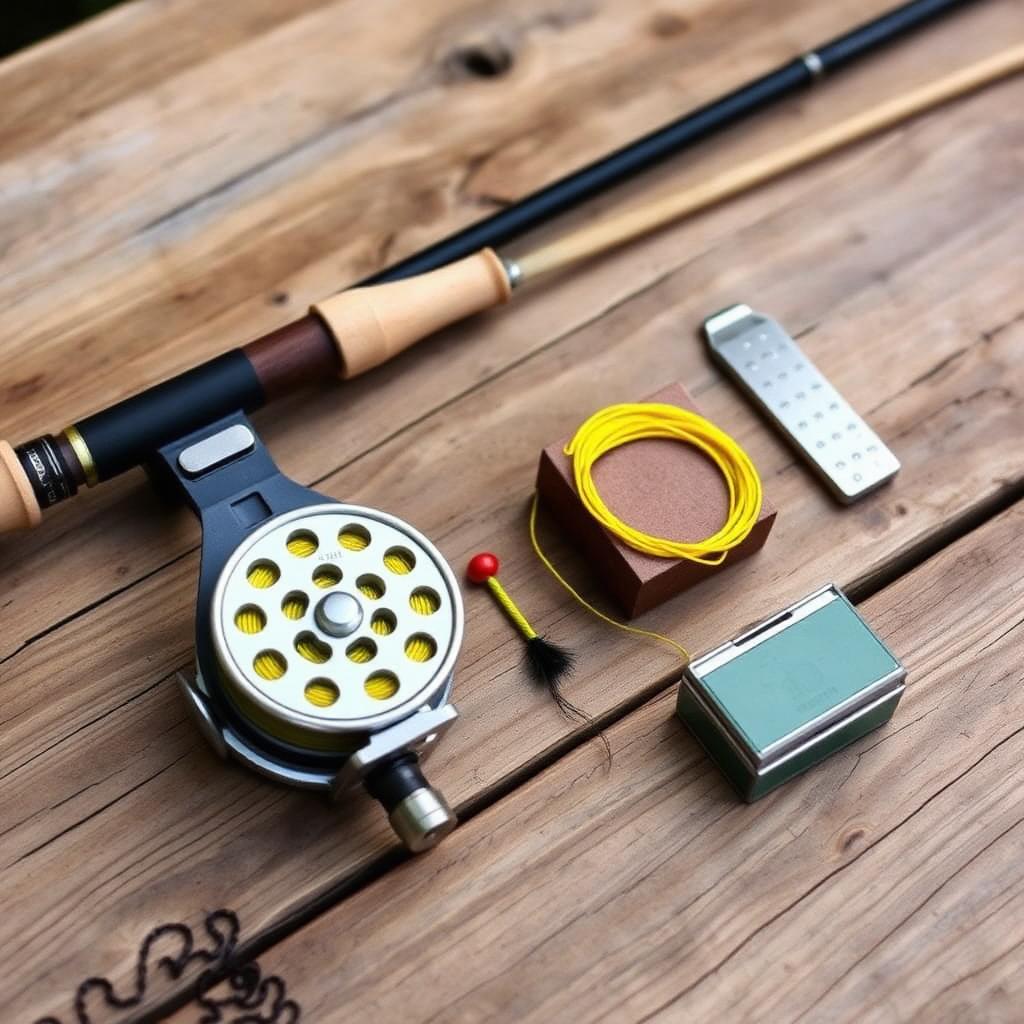
A functional fly fishing outfit is a chain of four connected components: rod, reel, fly line, and leader-tippet. The rod stores and releases the energy of your cast. The reel holds the line and, on larger fish, provides a drag. The fly line is the weight that loads the rod. The leader and tippet form a tapered, nearly invisible connection between the thick fly line and the fly itself. Change any one of these and the whole system changes, so beginners should keep the setup consistent while they learn.
For most freshwater trout, a 9-foot 5-weight rod is the industry-standard first outfit. It is long enough to mend line on moderate rivers, light enough to cast small dry flies, and strong enough to handle a surprising fish. Pair it with a matching 5-weight weight-forward floating line, a 9-foot 5X tapered leader, and a simple click-and-pawl or basic disc-drag reel.
The cast is a metronome, not a whip
New anglers almost universally try to muscle the line forward, and the result is a splashy, tangled mess. The overhead cast is a two-stroke rhythm — back, pause, forward — with the pause long enough to let the line straighten behind you before you drive the rod tip forward on a straight track. Think of the rod tip as a paintbrush drawing a level line across the sky rather than a stick swinging in an arc.
Practice on grass before you set foot in the water. Twenty minutes of grass casting each evening for a week will do more for you than a full day of frustrated fishing. Use a piece of yarn instead of a hooked fly and watch the line unroll. If your loops are wide and open, you are breaking your wrist. If your line piles up, you are stopping the rod too early.
Read water at a beginner level
You do not need to be an entomologist to catch a first trout. You need to understand that trout live where three things intersect: current that delivers food, depth or structure that provides safety, and oxygen. In practice this means the seams between fast and slow water, the tail-outs below riffles, and the softer cushions in front of and behind mid-stream boulders. Ignore the flat, featureless middle of the pool on your first outings.
Pick three flies and fish them well
Fly selection paralyzes new anglers. Start with three patterns: a Parachute Adams in size 14 for surface fishing, a Pheasant Tail Nymph in size 16 for subsurface, and a Woolly Bugger in size 10 for searching. These three cover the vast majority of trout situations across North America, Europe, and East Asia. Focus on presentation — a drag-free drift and a natural sink — before you worry about matching a hatch.
Safety and etiquette on the water
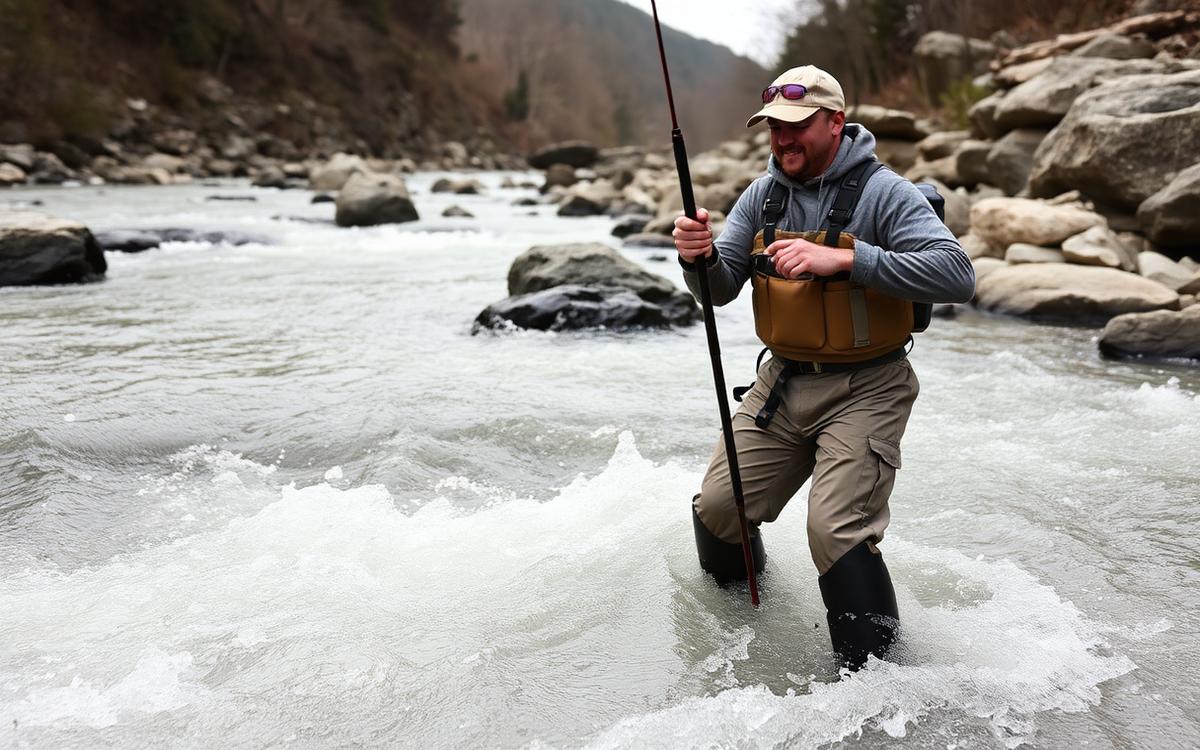
Wading is the most underestimated risk in fly fishing. Wear a wading belt, use a wading staff on unfamiliar rivers, and never cross above a rapid you cannot swim. Give other anglers a wide berth — an unwritten rule is 100 yards of space upstream and down. If you fish barbless and release fish quickly, you are already following the ethical baseline that keeps trout waters productive.
Fly fishing is a lifelong practice. The first season is about building basic mechanics and confidence, not about catching trophy fish. Slow down, watch the water, and let the sport reveal itself one drift at a time.
If you can only practice one thing in your first month, practice the pause on your backcast. Every other mistake stems from cutting that pause short. Set a metronome to 60 bpm and cast to the beat — you will be astonished how much cleaner your loops become in two weeks.
Frequently Asked
- Do I really need a 5-weight to start?
- Not strictly, but it is the widest-utility rod for freshwater trout and the standard first purchase. Only deviate if your local water demands it — very small creeks (3-weight) or windy stillwaters (6-weight).
- Can I use a fly reel from Amazon that costs $40?
- For panfish or small trout, yes. For anything that will actually run against the drag, no — the sealed-drag claim is usually false and the reel will fail.
- How long before I catch my first trout?
- With focused practice and access to trout water, most beginners land their first fish within three to five outings. Guided trips accelerate this significantly.
- Should I take a lesson or teach myself?
- Two hours with a certified casting instructor will save you months of ingrained bad habits. It is the single best investment in a first season.