Waders and Wading Boots: A Buying Guide That Survives the Season
Layer counts, fit, felt versus rubber, and the maintenance routine that doubles the life of a breathable wader.
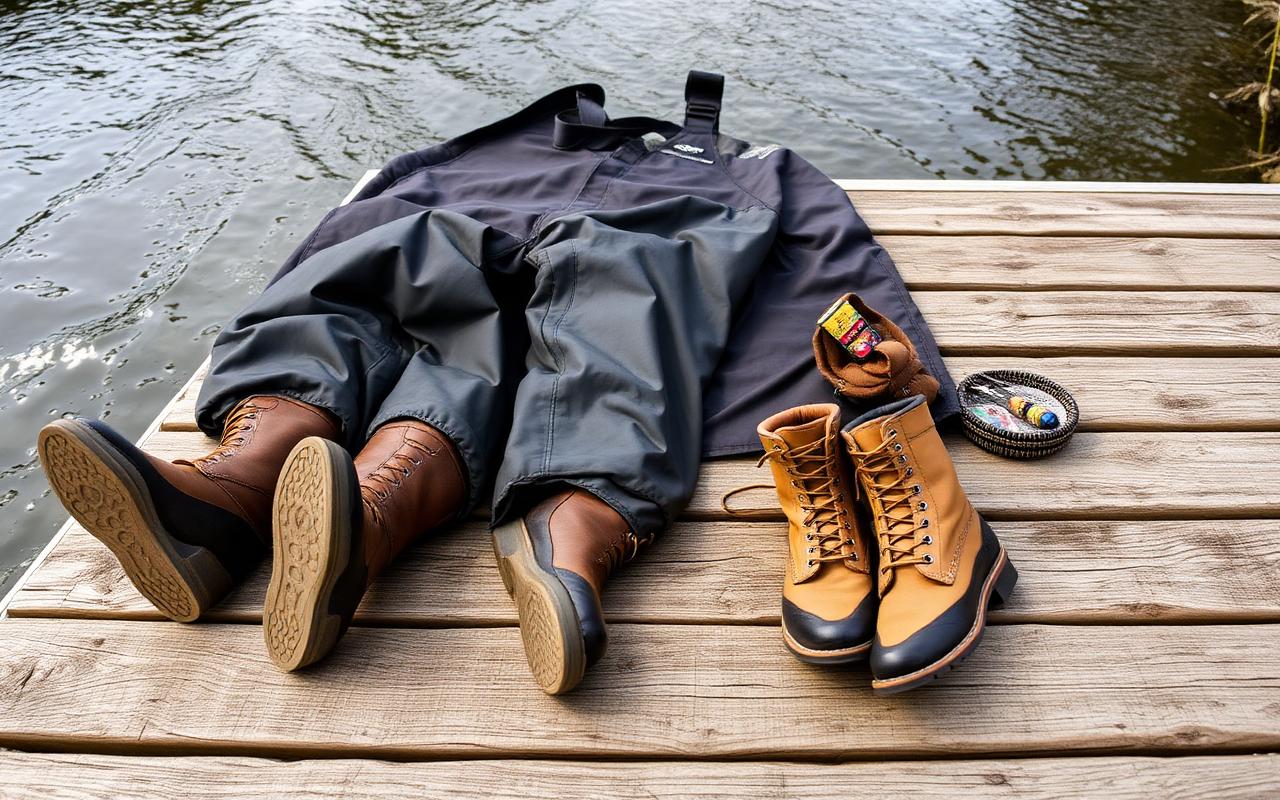
Breathable stockingfoot waders paired with separate wading boots are the modern standard. Fit, laminate construction, sole choice and care determine whether a pair lasts one season or ten.
Waders and boots are the least glamorous purchase in fly fishing and the one most likely to ruin a trip. A leaking seam in February ends a day in an hour. A boot with the wrong sole puts you on your back in a riffle. And unlike rods, which have converged on a high standard of quality across price points, waders still vary enormously in durability, fit, and honesty of marketing.
Stockingfoot versus bootfoot
Almost all serious modern waders are stockingfoot: a breathable garment ending in a neoprene sock, worn inside a separate wading boot. This combination gives better ankle support, better traction options, and easier drying. Bootfoot waders, with the boot bonded to the leg, remain useful in two situations — extreme cold, where the roomier boot allows heavy socks and better circulation, and mud-flat or duck-boat use where you need to get in and out fast.
Breathable fabric, decoded
Breathable waders are laminates: an outer face fabric for abrasion, a waterproof-breathable membrane, and an inner scrim. Manufacturers advertise layer counts — three-layer, four-layer, five-layer — and the sensible interpretation is that more layers means more durability and less breathability, not more waterproofness. A common good design uses three or four layers in the upper body, where you need breathability, and four or five in the legs and seat, where you need abrasion resistance against brush, gravel, and boat gunwales.
Ignore neoprene waders unless you fish genuinely cold saltwater or sit still in ice-water for hours. They are waterproof and warm, but they do not breathe at all, and an angler who hikes a mile in neoprene arrives soaked from the inside.
Fit is the whole ballgame
Waders fail at stress points, and stress points are created by bad fit. Too tight in the crotch and inseam, and the seams blow out within a season. Too loose and you get a bellows effect that chills you and snags on brush.
- Try them on with the layers you actually fish in, and squat deeply. If the crotch pulls, size up.
- Check the bootie size against your normal shoe size; a neoprene sock that is too small causes cold feet and blisters.
- Reach overhead and step onto a chair. Full range of motion in the store is the minimum for scrambling on a riverbank.
- Consider a women's-specific or tall/short cut rather than accepting a generic fit — several manufacturers now offer genuinely different patterns, not just resized ones.
Sole choice, and the felt debate
Felt soles grip slick algae-covered rock better than anything else and are still the choice of many guides on freestone rivers. They are also banned in several states and countries because the porous felt transports invasive organisms — didymo, whirling disease spores, New Zealand mudsnails — between drainages. Check regulations before you buy.
Modern sticky-rubber compounds have closed much of the traction gap and are dramatically better on the bank, in the boat, and on the hike in. Add carbide studs and rubber outperforms bare felt on most surfaces. The practical recommendation for a first buyer is rubber soles with a set of studs, plus a studded felt pair later if your home water is exceptionally slick and permits felt.
Price tiers and what changes
Around the entry level you get functional breathable waders with taped seams, a simple front pocket, and a two-to-three-season life under moderate use. In the middle tier you get better fabric weight distribution, gravel guards that actually stay put, more articulated knee patterning, and a serious warranty. At the top you are paying for the most durable laminates, reinforced high-wear zones, fit variety, and repair programmes that will keep a garment alive for a decade.
The single strongest buying criterion is not fabric — it is the manufacturer's repair service. Waders are consumable, and the brands that will re-seam and patch yours for a modest fee are cheaper over five years than a cheaper wader that gets thrown away.
Accessories that matter
A wading belt is a safety device, not a convenience, and should be worn snug at all times; it limits the volume of water that enters if you go down. A wading staff transforms confidence in heavy water and costs a fraction of an ambulance ride. Gravel guards keep the grit out of the boot that destroys your booties from the inside. Good merino socks manage moisture in a way cotton cannot.
Care, and why most waders die young
Waders rarely fail because the membrane wore out. They fail because they were stored wet, folded on the same crease, in a hot car, with dried grit inside. The maintenance routine is short and doubles the life of the garment.
- Rinse inside and out with fresh water after saltwater or muddy days.
- Hang to dry fully — inside out first, then right side out — before storage.
- Store hanging by the suspenders, never folded, and never in a hot vehicle.
- Refresh the DWR coating with a wash-in or spray-on treatment once or twice a season; wetting-out of the face fabric is the most common cause of the 'my breathable waders are leaking' complaint that turns out to be condensation.
- Patch pinholes immediately with the manufacturer's repair kit; find them by turning the waders inside out in a dark room with a bright light inside.
Cleaning between waters
Invasive species travel on gear. The accepted protocol is clean, drain, dry: scrub off visible mud and vegetation, drain all water from boots and folds, and dry completely for at least 48 hours before fishing another drainage. Where drying time is not available, a disinfectant soak using the product and dilution recommended by your local fisheries agency is the alternative. This is a small ritual that protects the water you are about to fish and every water you fish afterwards.
A simple recommendation
For a first serious purchase, buy mid-tier stockingfoot waders from a manufacturer with a real repair programme, in a size that fits with your winter layers, paired with studded rubber-soled boots one half-size up from your street shoe. Add a wading belt and a staff. That combination handles almost all freshwater fishing anywhere, survives several seasons of hard use, and will not be the reason you go home early.
Most 'leaking' breathable waders are not leaking — the face fabric has wetted out and you are feeling condensation. Refresh the DWR coating once a season before assuming a failure.
Frequently Asked
- Felt or rubber soles?
- Rubber with studs for most anglers; felt is banned in several jurisdictions because it transports invasive organisms.
- How much should I spend?
- Mid-tier from a brand with a real repair programme. Repairability matters more than fabric marketing.
- Do I need a wading belt?
- Always. It is a safety device that limits water entry if you go down, not an optional accessory.
- How do I store waders?
- Fully dry, hanging by the suspenders, out of hot vehicles. Never folded and never wet.