Scotland: Beats, Ghillies and Four Centuries of River Etiquette
Salmon on the Spey and Tweed, loch-style browns, night sea trout, and how the Scottish beat system actually works.
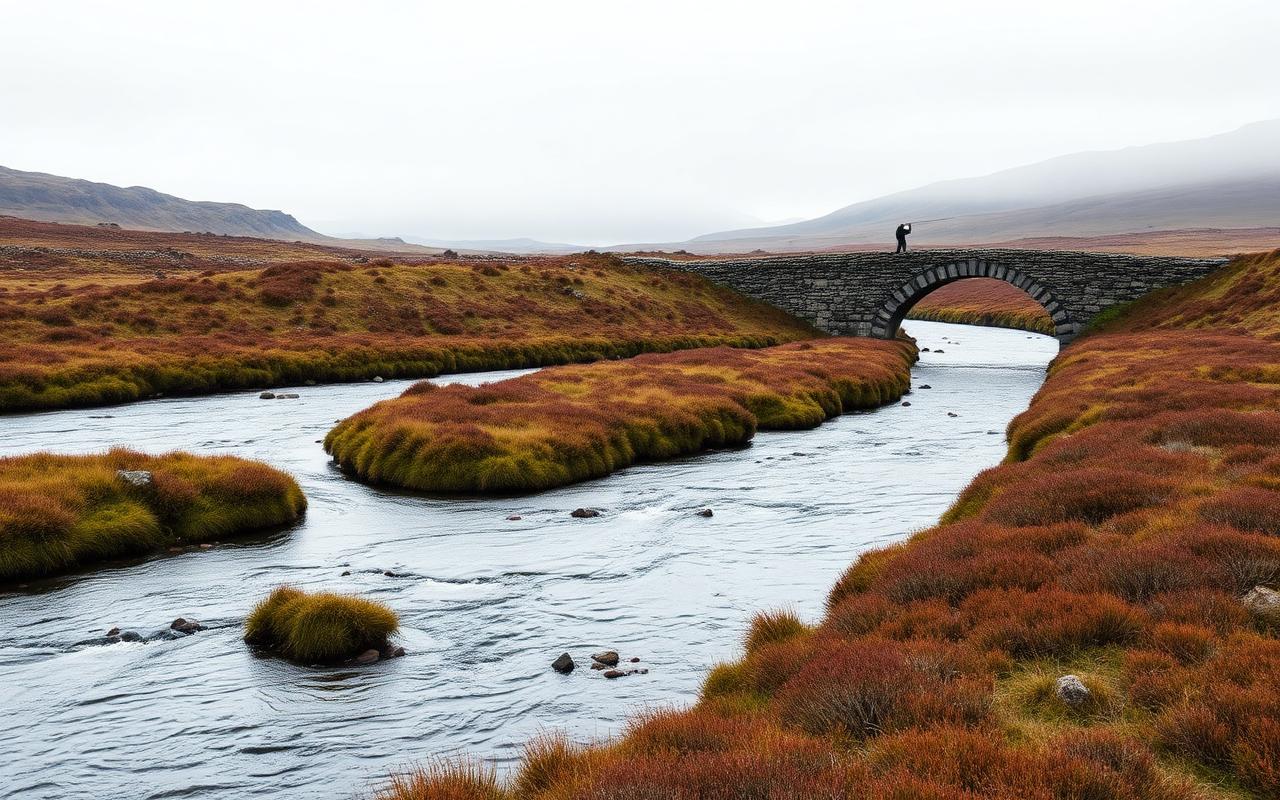
Scottish fly fishing is organised around privately owned beats with ghillies, a system in continuous operation for centuries. It encompasses three distinct fisheries: Atlantic salmon, wild loch and burn brown trout, and night sea trout.
Scotland offers something no other fly fishing destination quite does: living continuity. The rivers of the Highlands and Borders have been fished with a fly, under recognisably similar etiquette, for more than four hundred years. The ghillie who meets you at the hut is the current holder of a role that predates most national fishing organisations. And the fish — Atlantic salmon, sea trout, and wild brown trout — still run into the same pools with the same names.
Three fisheries in one country
Scottish fly fishing divides into distinct pursuits that require different plans and budgets. Atlantic salmon fishing on the great rivers — Tay, Spey, Dee, Tweed — is the famous one: beat-based, ghillie-guided, priced per rod-day, and steeped in ritual. Wild brown trout fishing on the lochs and hill burns is the opposite: inexpensive, often free or covered by a modest permit, and gloriously informal. Sea trout fishing, largely at night on west-coast and Border rivers, sits between them and is arguably the most atmospheric fishing in Britain.
A first-time visitor with a limited budget will get far more fishing from the loch and burn option; a visitor whose ambition is a Scottish salmon should plan around one or two good beats and accept that the rest of the week is travel and scenery.
The beat system, explained
Almost all Scottish salmon water is privately owned and let as beats — defined stretches of river with a fixed number of rods per day. You book a rod on a beat for a day or a week, usually through an agent, an estate office, or a hotel. The beat may rotate anglers between named pools on a schedule so everyone fishes the best water in turn. A ghillie manages that rotation, advises on fly and line choice, nets fish, and knows the river at a level no visitor can approach.
Prices vary enormously by river, beat, and week — from very modest on smaller rivers in shoulder seasons to extraordinary on prime Tweed autumn weeks. The unglamorous truth is that mid-tier beats in good water conditions frequently outfish famous beats in poor conditions, so flexibility about location and rigidity about water level is the smart approach.
Timing the runs
- Spring (February–May): spring salmon on the Tay, Dee, and Spey. Cold water, big fish, low numbers, sinking lines and heavy tubes.
- Summer (June–August): grilse runs, low warm water, floating lines and small flies, plus the best of the loch trout fishing and night sea trout.
- Autumn (September–November): the largest runs on the Tweed and Tay; big coloured fish, changeable weather, the most sought-after weeks.
- Brown trout season: broadly mid-March to early October, with the best hill loch fishing from May onward.
Tackle for Scottish water
Salmon fishing here is predominantly two-handed. A 13 to 15-foot double-hander in 8 to 10-weight covers most big-river work, with Scandi heads and floating lines for summer and Skagit or full sinking heads with sink tips for spring and autumn. Bring a range of tips; ghillies will tell you exactly which to use and expect you to have them.
Trout fishing on lochs is done from a drifting boat with a 10-foot 6-weight and a team of three wet flies fished on a short line and figure-of-eight retrieve — a technique called loch-style that is worth learning before you arrive. Hill burn fishing needs nothing more than a short 3 or 4-weight and a box of small dries.
Access rights and etiquette
Scotland's outdoor access legislation gives the public broad rights of responsible access to land and inland water — but fishing rights are a separate legal matter. You may walk almost anywhere; you may not fish anywhere. Salmon and sea trout rights are owned; brown trout rights are also owned but frequently made available cheaply through local angling associations and hotels.
Etiquette on a beat is specific and easy to observe. Fish down the pool at a steady pace, take a step after each cast, do not linger in the best lie, and let the angler behind you through. Ask the ghillie before changing fly or lengthening line. Tip the ghillie at the end of the day — the customary amount is worth asking your agent about in advance. And be honest in the fishing book: it is the river's long-term dataset.
Conservation reality
Atlantic salmon numbers in Scotland have declined sharply over recent decades, driven by marine survival, warming rivers, and pressures on smolts. Catch-and-release is now mandatory in spring across all Scottish rivers and is the near-universal practice thereafter. Many beats require barbless or de-barbed single hooks and forbid certain methods entirely in low water.
Take this seriously rather than as red tape. The visitor who insists on fishing at four in the afternoon in a warm low river is the visitor no ghillie wants back. Fish early and late in heat, keep fish in the water, and be willing to stop when conditions are wrong.
Building a realistic first trip
A well-shaped first Scottish week for a visiting angler: base in Speyside or the Borders, book two rod-days on a mid-tier salmon beat with a ghillie, spend two days on hill lochs with a local boatman for wild browns, keep one day free for a burn in the hills, and accept one day for weather. That structure delivers the full range of Scottish fishing rather than gambling the whole trip on a single salmon lie.
Bring waterproofs you actually trust, expect four seasons in a day, and understand that the fishing is only part of the value. The country's rivers come with stone bothies, three-hundred-year-old fishing books, and ghillies who have watched the same pool for thirty years. Very little of that exists anywhere else in the sport.
Book flexibly and prioritise water conditions over famous names. A mid-tier beat in good water outfishes a prestige beat in a drought, every time.
Frequently Asked
- How expensive is Scottish salmon fishing?
- Enormously variable — from modest on smaller rivers in shoulder weeks to very high on prime Tweed autumn beats.
- Do I need a two-handed rod?
- For big-river salmon, effectively yes: a 13-15 foot double-hander. Loch trout fishing needs only a 10-foot 6-weight.
- Can I fish for free in Scotland?
- Access rights to land are broad, but fishing rights are separately owned. Brown trout permits are often cheap through local associations.
- Is catch-and-release required?
- Mandatory for salmon in spring across Scotland, and near-universal practice for the rest of the season.