Fishing Japan's Mountain Streams: A Guide to Tenkara Country
Iwana, yamame and amago in the streams that gave the world tenkara.
Japan's mountain streams host three native salmonids and are the birthplace of tenkara. Access is regulated through local fishing cooperatives (yugyoken) and the culture prizes quiet, respectful angling.
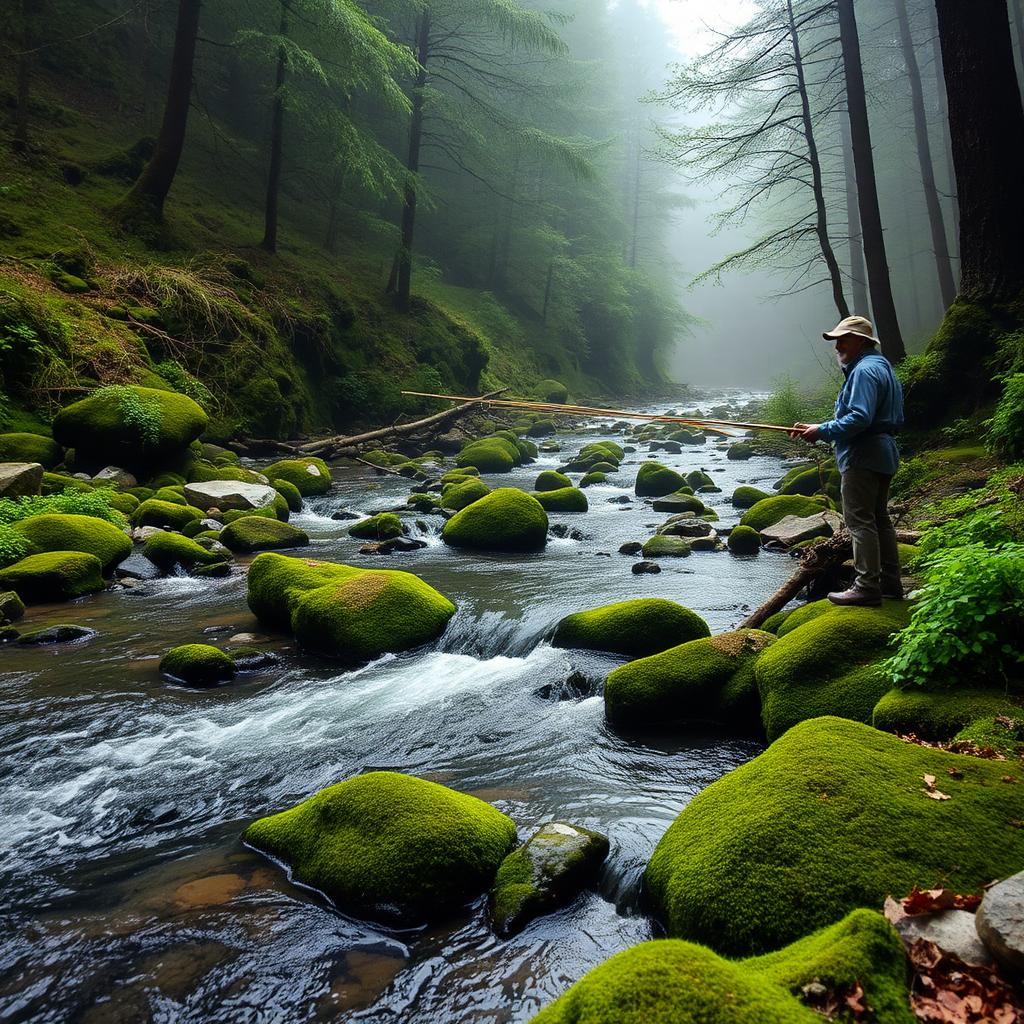
Japan is the ancestral home of tenkara and a surprisingly deep modern trout destination. Small, tumbling mountain streams (keiryu) hold three native char and salmonid species in landscapes of ancient forests, moss-covered rocks, and shrine-guarded pools. It is fishing at a completely different scale from Western trout waters.
Target species
Three native fish define Japanese mountain fishing: Iwana (Japanese char), the highest-elevation specialist, holding in the coldest headwaters. Yamame (landlocked cherry salmon), the pretty, spotted stream dweller found at middle elevations. Amago, a red-spotted subspecies of the same fish, native to central and western Japan. All three are typically 15 to 30 centimeters — small by American standards, but perfect for the tackle and technique the country evolved.
Tenkara: fixed-line simplicity
Tenkara uses a long telescoping rod (typically 3.6 to 4.5 meters), a fixed length of level or tapered line, a tippet, and a single fly. No reel. The angler manipulates the fly with rod movements to imitate rising, twitching, and swimming insects. On small streams under 20 feet wide with tight overhead canopy, tenkara out-fishes Western setups because it eliminates line drag.
Where to fish
The Japanese Alps in Nagano and Gifu prefectures are the classic destinations, with dozens of clear, cold streams. Tohoku (northern Honshu) and Hokkaido offer more remote, less pressured water with larger fish. Public access is generous but requires purchasing a daily or seasonal ticket (yuugyoken) from the local fishing cooperative — usually 1500 to 3000 yen per day.
Seasons and regulations
The general season opens March 1 and closes September 30, though dates vary by prefecture. Winter and spawning-season closures protect fish. Catch-and-release is common but not universal — some cooperatives require harvest of stocked fish to protect natives. Read local rules and, when in doubt, release.
Cultural etiquette
Japanese stream fishing is quiet and respectful. Do not crowd another angler — move to the next pool or the next stream. Bow slightly when passing on the trail. Buy your daily ticket at the local shop, not from the internet, and support the cooperative that maintains the water. Pack out every scrap of tippet and every candy wrapper.
Gear notes
A single quality tenkara rod (Tenryu, Nissin, Daiwa) in the 3.6 to 4.0 meter range covers most situations. Bring level line in 3.5 to 4.5 size, 5X and 6X tippet, and a small box of traditional sakasa kebari (reverse-hackle wet flies) plus a few Western dries in size 14 to 18. Studded wading boots and neoprene socks handle Japanese wet-wading conditions.
Language and logistics
Rural fishing areas see few English speakers. Google Translate and Japanese-language fishing maps (available at any tackle shop) are essential. Rail service reaches most base towns; a rental car opens up remote streams. Ryokan (traditional inns) and minshuku (family-run guesthouses) offer authentic basing at moderate prices.
The philosophy
Tenkara and Japanese stream fishing prize elegance, simplicity, and connection with the mountain environment. Fish are often small, but the setting — ancient cedar forests, temple bells echoing from the ridge, tea after fishing — creates an experience that recalibrates what fly fishing can be.
Japan rewards travelers who arrive humble, respectful, and willing to fish differently. Go with an open mind and the country will change how you fish forever.
The best base for a first Japanese tenkara trip is Nagano Prefecture — dozens of streams within an hour of Matsumoto, quality ryokan lodging, and easy rail access from Tokyo.
Frequently Asked
- Do I need to speak Japanese?
- Basic phrases and Google Translate work. Rural fishing areas see few English speakers.
- Can I use a Western fly rod?
- Yes, but tenkara excels in the tight canopy typical of Japanese streams. A 3.6m tenkara rod is the ideal tool.
- How do I buy a fishing ticket?
- At the local tackle shop or convenience store nearest the water. Cash. Usually 1500-3000 yen per day.
- Best month to visit?
- May-June and September-October. Avoid July-August (crowded holidays) and the winter closure.