Saltwater Flats: An Introduction to Bonefish on the Fly
Sight-fishing white sand for bonefish, permit and tarpon — where fly fishing becomes a hunt.
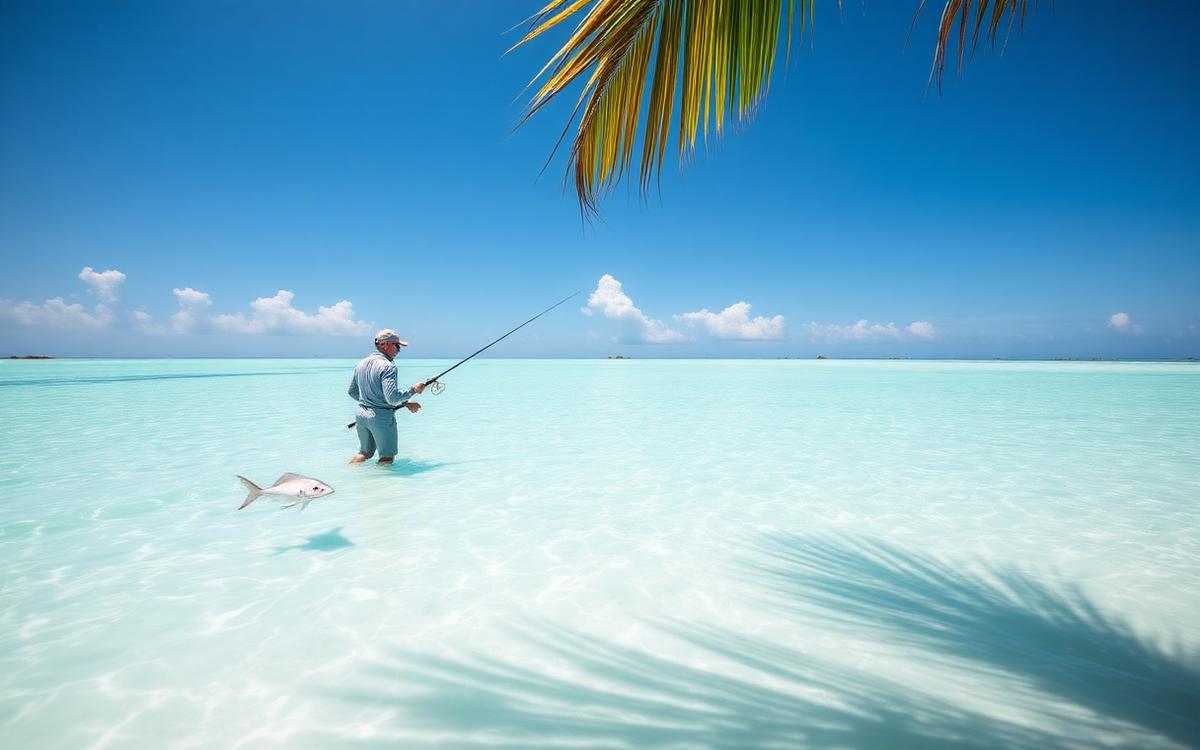
Flats fishing is fly fishing at its most visual — spotting cruising fish in inches of clear water and delivering a fly with lead, wind, and one chance at success.
Saltwater flats fishing is fly fishing at its most visual and demanding. Wading white sand in shin-deep water, spotting a bonefish tail tipping in the sun, delivering a fly 60 feet with 15 knots of wind on your casting shoulder — this is a discipline of its own that shares only equipment vocabulary with trout fishing.
The species and where to find them
Bonefish are the entry-level flats species — abundant in the Bahamas, Belize, the Yucatan, the Seychelles, and Hawaii. Permit are the graduate degree — sparse, spooky, and famously difficult. Tarpon, from ten-pound juveniles in Florida backwaters to 150-pound migratory giants, are the third pillar. Redfish on Gulf Coast flats provide a more accessible saltwater experience for North American anglers.
The rod and line
An 8-weight fast-action rod is the bonefish standard; step up to a 9 or 10 for permit and small tarpon, and a 12-weight for big tarpon. Saltwater-specific fly lines have short, aggressive front tapers designed to turn over heavy flies in wind. Use them; freshwater trout lines fail immediately in flats conditions.
Sighted fishing changes everything
Unlike river fishing, you do not cast blind on the flats. You spot the fish first — a shadow moving across sand, a tail breaking the surface, a nervous water pushed by a school — and then present the fly. Polarized sunglasses are not optional. Copper or amber lenses reveal fish in shallow water; gray lenses handle bright deep water.
The lead is everything
A bonefish moving three feet per second needs a fly to land three feet in front of it, not on it. Land the fly two feet away and the fish spooks; land it eight feet away and it never sees the fly. Learning this instinctive lead — and adjusting it to fish speed, water depth, and fly weight — is the core skill of flats fishing.
The strip and the eat
Once the fly lands, let it sink briefly, then strip it in short erratic movements to mimic a fleeing shrimp or crab. When the fish eats, the takes are usually subtle — a slight pause, a resistance, a sideways movement. Strip-set hard: never lift the rod on a saltwater eat, ever.
The run
A hooked bonefish will empty your reel of 100 feet of line in the first five seconds. Keep your line hand clear of the flying loops; keep the rod tip low and to the side. The fish will run into the backing on nearly every hookup — one of the sport's great sensations.
Guides, DIY, and the honest math
Guided flats fishing is expensive — $600 to $900 per day at established lodges. DIY is possible in the Bahamas, Belize, and parts of the Yucatan for a fraction of the cost but requires research, a rental car, and tolerance for missed fish while you learn. First trip: hire a guide. Subsequent trips: mix guided and DIY days.
Flats fishing will humble a competent trout angler in the first two hours. Bring your best casting, dial in your wind casts before you arrive, and expect to spend the first day learning to see fish before you catch one.
Practice 60-foot casts into wind with a weighted fly for a month before your first flats trip. The gap between backyard casting and flats casting is enormous.
Frequently Asked
- What rod weight for bonefish?
- An 8-weight fast-action is the universal starting point. Move to a 9 or 10 for permit and small tarpon.
- Do I need a guide?
- For a first trip, yes — a good guide compresses months of self-learning into a single week.
- Best entry-level destination?
- The Bahamas (Grand Bahama, Andros, or the Berry Islands) — abundant bonefish, English-speaking guides, reasonable travel.
- Is fly fishing possible for saltwater DIY?
- In parts of the Bahamas and Yucatan, yes, with rental car and research. Bring your best casting.