The History of Fly Fishing: 1800 Years of Feathers and Water
From Roman anglers on the Astraeus to modern tenkara — how the sport has evolved and what has stayed the same.
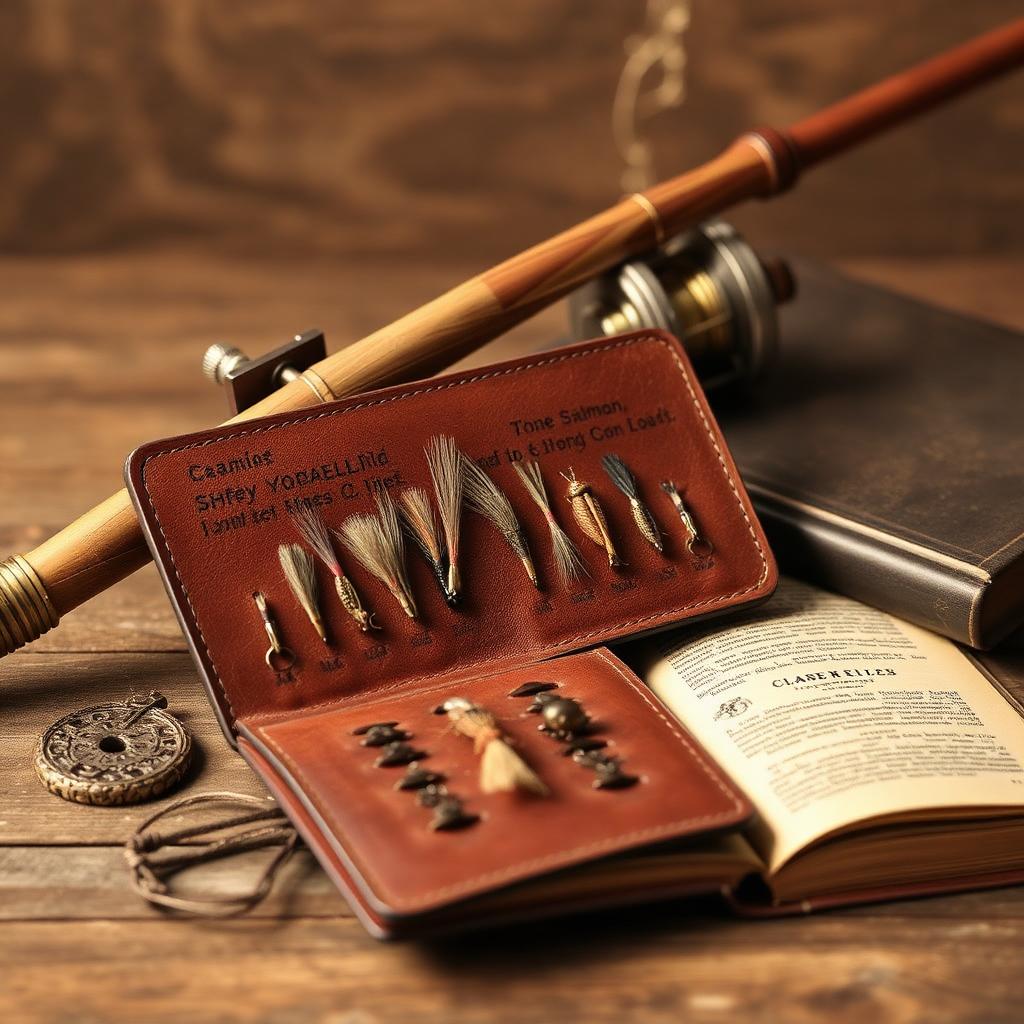
The earliest documented reference to artificial fly fishing dates to Claudius Aelianus around 200 AD. The sport has continuous written history through medieval England, the Victorian golden age, the American Catskill school, and into the graphite era.
Fly fishing's written history stretches back further than most anglers realize. The oldest known text describing artificial fly fishing is De Natura Animalium by the Roman writer Claudius Aelianus, written around 200 AD, describing Macedonian anglers fishing the Astraeus River with hooks dressed in red wool and rooster feathers. The technique that anglers use today is genuinely ancient.
Medieval and Renaissance origins
The Treatyse of Fysshynge with an Angle, attributed to Dame Juliana Berners and published in 1496, is the first English-language work on fly fishing. It describes twelve fly patterns organized by month — a hatch chart, essentially — that remained influential for centuries. Izaak Walton's The Compleat Angler (1653) codified the sport's contemplative philosophy and became one of the most reprinted books in the English language.
The Victorian golden age
The 19th century saw fly fishing evolve from a practical food-gathering activity into a codified sport. British anglers on the chalk streams of Hampshire — the Test, the Itchen — developed dry fly fishing under figures like Frederick Halford. American anglers, notably Theodore Gordon in the Catskills, adapted these techniques to freestone streams and created uniquely American patterns like the Quill Gordon.
The American development
The Catskill school of tying — Gordon, Rube Cross, Art Flick, the Dettes, the Darbees — refined dry fly design for eastern brook and brown trout waters. In the West, Lee Wulff developed durable hair-wing patterns for large western rivers. Post-war, Ernest Schwiebert's Matching the Hatch and Doug Swisher and Carl Richards's Selective Trout pushed the sport toward scientific precision.
The modern era
The 1970s and 80s introduced graphite rods, replacing bamboo and fiberglass and democratizing the sport. The film A River Runs Through It (1992) triggered a boom in participation. The 21st century has seen the rise of European nymphing techniques, saltwater fly fishing's mainstreaming, and the tenkara revival — all expanding what fly fishing can mean.
Regional traditions worth knowing
- British chalk stream: Upstream dry fly to rising fish, strict etiquette, keepers and beats.
- Scottish and Norwegian salmon: Two-handed spey casting, wet fly on the swing, deep tradition.
- American Rocky Mountain: Multi-fly rigs, hopper-dropper, big western rivers.
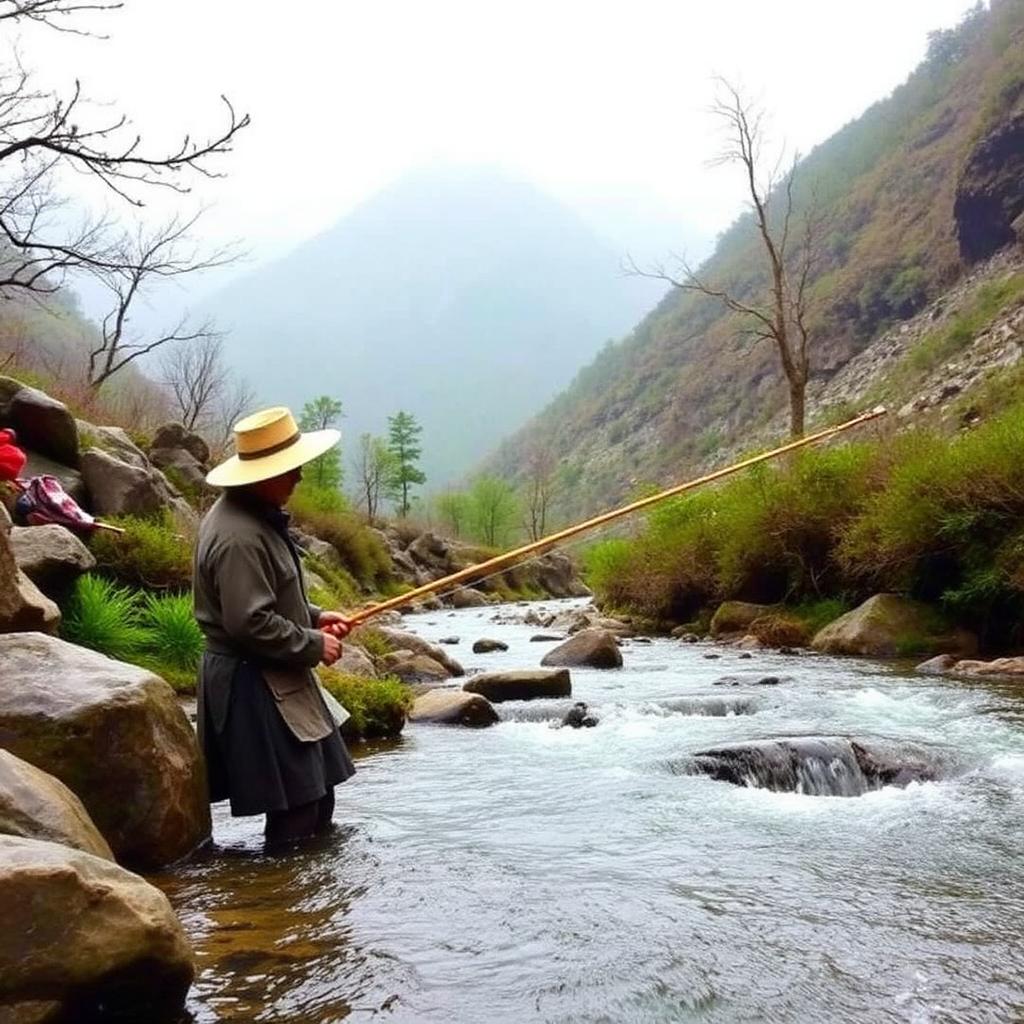
- Japanese tenkara: Fixed-line, single fly, mountain streams, minimalist philosophy.
- Argentine sea-run brown: Two-handed casting, sinking lines, trophy hunting.
Literature that shaped the sport
Beyond Walton, essential reading includes Ernest Hemingway's Big Two-Hearted River, Norman Maclean's A River Runs Through It, John Gierach's essay collections, Roderick Haig-Brown's A River Never Sleeps, and Thomas McGuane's The Longest Silence. These books frame the sport not as a hobby but as a way of engaging with landscape and time.
The through-line
For 1800 years, fly fishing has been about deceiving a wild fish into eating a bundle of feathers because it looks like food. The materials have changed — silk to nylon to fluorocarbon, cane to graphite — but the fundamental act is identical to what Macedonian anglers did on the Astraeus. Recognizing that continuity connects a modern angler to one of humanity's oldest recreational traditions.
Understanding where fly fishing came from makes the present richer. It reminds you that the pursuit is bigger than the individual trip.
Read Norman Maclean's <em>A River Runs Through It</em> and John Gierach's <em>Trout Bum</em> back to back. Together they cover the emotional and cultural range of what fly fishing means in American life.
Frequently Asked
- Who invented dry fly fishing?
- The technique evolved gradually; Frederick Halford codified it on the English chalk streams in the late 1800s.
- When did fly fishing arrive in America?
- European settlers brought the sport, but it took distinctive American form in the Catskills in the mid-1800s.
- Is bamboo still made?
- Yes. Roughly 200 craftsmen worldwide still build bamboo rods commercially.
- What is the oldest fly still in use?
- Variations of the Partridge and Orange soft hackle date to at least the 1600s and remain effective.