Dam Removal: The Fastest-Working Idea in River Conservation
Why obsolete dams are coming out, how quickly fish return, and the culvert problem nobody photographs.
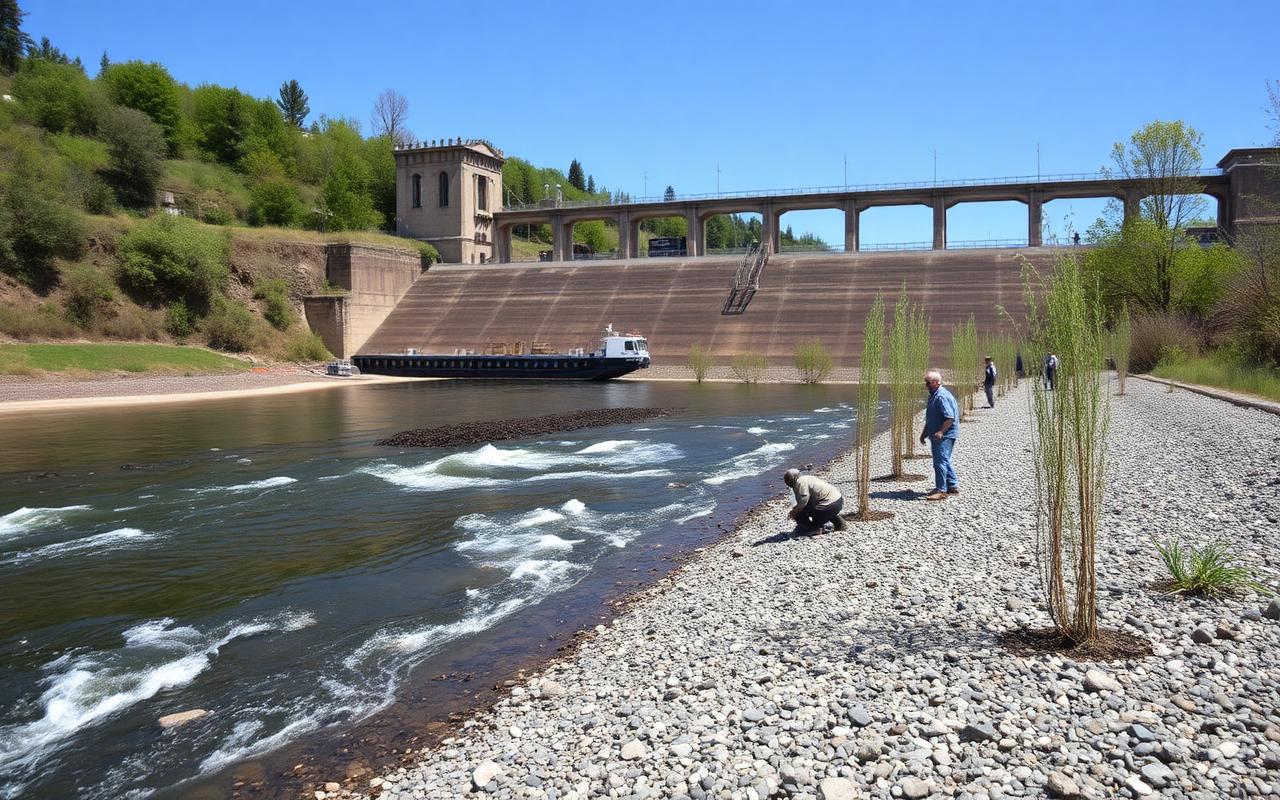
More than two thousand dams have been removed in the United States over recent decades, mostly because aging structures became liabilities. Documented recolonisation by salmon, steelhead and trout has often occurred within months of removal.
The most consequential thing happening in trout and salmon conservation is not a fly pattern, a slot limit, or a hatchery policy. It is the removal of obsolete dams. Over the past three decades, more than two thousand dams have been taken out of rivers in the United States alone, and the ecological results have been faster and more dramatic than almost anyone predicted.
Why dams matter to fish
A dam does several things to a river simultaneously, and each one is bad for migratory and cold-water fish. It blocks passage, cutting a population off from spawning habitat upstream. It traps sediment and gravel, starving downstream reaches of the substrate that fish spawn in. It converts flowing water into an impoundment that warms in summer, favouring warm-water species over trout and salmon. It alters flow timing, flattening the natural high-water pulses that cue migration and clean gravel. And it disrupts the movement of nutrients, most importantly the marine-derived nutrients that returning salmon carry upstream into forest ecosystems.
For a salmon or steelhead population, a single impassable dam low in a watershed can eliminate access to hundreds of miles of habitat. For resident trout, a series of small dams can fragment one population into a dozen isolated ones, each too small to withstand a drought, a fire, or a bad spawning year.
The economic case that usually decides it
Removals rarely happen because of fish alone. They happen because dams age. A large share of the dams in the United States were built more than sixty years ago; many no longer serve their original purpose — a mill that closed, an irrigation ditch that moved, a hydro licence that is no longer economic. Aging dams require inspection, maintenance, and eventually expensive rehabilitation to meet safety standards.
At that point the owner faces a straightforward comparison: pay to rebuild a structure that generates little or no value and carries permanent liability, or pay once to remove it. In a large fraction of cases removal is cheaper, and the ecological benefit is effectively free. That is why removals accelerate every year, and why they attract support from constituencies that agree on very little else.
What happens after the dam comes out
The pattern documented across dozens of removals is remarkably consistent. In the first weeks there is a pulse of stored sediment moving downstream, which looks alarming and is usually temporary. Within one to three years the channel re-forms into riffles, runs, and pools; gravel returns; and vegetation colonises the exposed former reservoir bed.
Fish response is often immediate. On the Elwha River in Washington, salmon and steelhead were documented above the former dam sites within months of removal — before any stocking, from remnant populations and strays finding newly opened habitat. Similar rapid recolonisation has been recorded on the Penobscot in Maine, the Kennebec, the Rogue in Oregon, and dozens of smaller streams where brook trout reoccupied headwaters within a season or two of a barrier being pulled.
The barriers nobody photographs
Large dam removals get documentary crews. The larger cumulative problem is small: perched and undersized road culverts. A culvert whose outlet hangs a foot above the stream is impassable to juvenile trout, and there are hundreds of thousands of them across North American road networks. Replacing one culvert with a properly sized, stream-simulation crossing frequently reconnects several miles of headwater spawning habitat for a cost that is trivial compared with any dam project.
This is where individual anglers can have measurable effect. Culvert inventories, barrier-prioritisation surveys, and replacement projects are routinely run by local watershed councils and Trout Unlimited chapters, funded in part by small grants and staffed substantially by volunteers. It is unglamorous, and it works.
Legitimate complications
Honest advocacy acknowledges the trade-offs. Some dams provide genuine flood control, water supply, or low-carbon generation, and removing them is not obviously correct. Reservoirs create recreational fisheries and lakeside communities that people value and will fight for. Sediment behind long-standing industrial dams is sometimes contaminated and must be managed rather than released. Property values, water rights, and tribal treaty obligations all intersect.
Some tailwater fisheries that anglers love — technically excellent, cold, year-round trout water below bottom-release dams — exist only because of a dam, and a removal there would end that fishery while restoring a different, usually native one. Thoughtful anglers can hold both facts at once: that a beloved tailwater is artificial, and that restoring a native migratory run may still be the better outcome for the watershed.
How to be useful
- Join and actually attend a local watershed council or Trout Unlimited chapter; barrier work is decided in meeting rooms long before it happens in the river.
- Volunteer for stream surveys, culvert inventories, and riparian plantings — the labour bottleneck is real.
- Support the state and federal funding programmes that pay for removals; most projects assemble money from four or five sources.
- Report barriers you find while fishing to the relevant agency or council. Anglers walk more small streams than biologists do.
- Talk about post-removal fisheries publicly and accurately, so the political case for the next project is easier to make.
The long view
A river is not a static thing that we either preserve or lose. It is a process — water, sediment, wood, and fish moving through a valley — and a dam is a pause button pressed on that process decades ago for reasons that in many cases no longer exist. Removing it does not create a river; it lets one resume.
For anglers, this is the rare conservation story with an unambiguous outcome. Within a decade of a removal, there is more habitat, more fish, and more water worth fishing than there was before. Very little else in this field pays back that quickly.
The highest-leverage volunteer work in trout conservation is not planting trees — it is culvert inventory and replacement, which reconnects miles of spawning habitat for a fraction of a dam project's cost.
Frequently Asked
- Do fish really return that fast?
- Yes. On the Elwha, salmon and steelhead were documented above former dam sites within months, with no stocking.
- Are all dams bad?
- No. Some provide real flood control, water supply or generation, and some create valued tailwater fisheries. Each case is a trade-off.
- What about the sediment?
- A downstream sediment pulse is normal and usually temporary; contaminated reservoir sediment requires managed removal.
- How can an angler help?
- Join a watershed council or TU chapter, volunteer for surveys and plantings, and report barriers you find while fishing.