The Slow Craft of Building Bamboo Fly Rods
Eighty hours of hand work, a two-year waiting list, and why some anglers still fish nothing else.
Bamboo rod building persists as a niche craft with roughly 200 active custom builders worldwide. Modern bamboo rods draw on tapers refined over a century by Payne, Garrison, Leonard, and their successors, and command $2,000-$4,000 with multi-year waits.
Bamboo fly rod building is a craft in slow revival. In an era of graphite production runs measured in thousands per model, a handful of builders around the world still split culms of Tonkin cane, plane the strips by hand, and glue up rods that take eighty hours and command four-figure prices. I spent two days with one of them.
The workshop
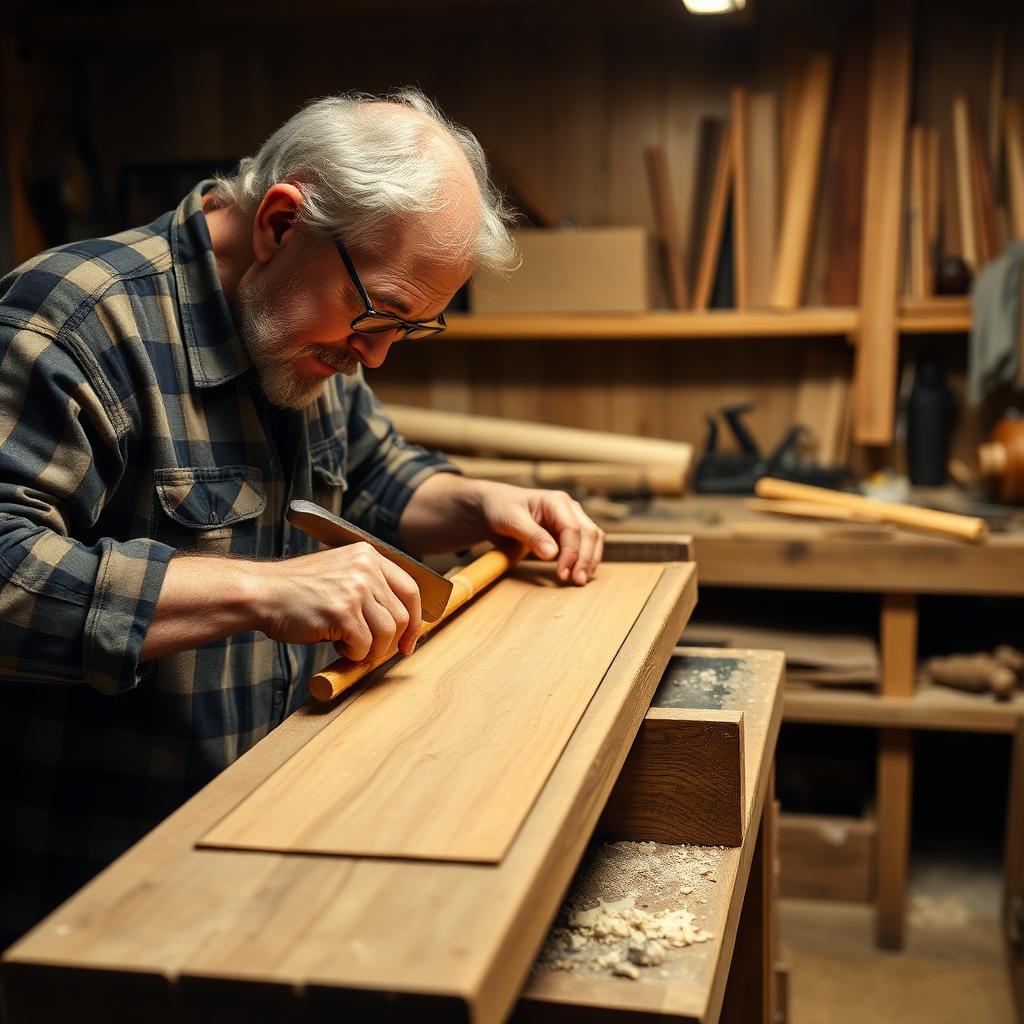
Marcus Kellerman's workshop occupies a converted barn in rural Vermont. Tonkin cane leans against one wall — six-foot culms imported from a single valley in Guangdong province, aged three years before use. A cast-iron planing form dominates the workbench. Hand tools, most a century old, line the pegboard. There are no CNC machines, no computer models, and no shortcuts.
The material
'Tonkin cane from Sui River is the only material that has ever worked for high-performance bamboo rods,' Marcus explains. 'The internodes are long, the fibers are dense, and the density profile from outside to inside is exactly what you want. People have tried substitutes for a hundred years. Nothing else works the same way.' A single culm costs him roughly $80 and yields two or three rod blanks.
The process
A rod starts as splitting the culm into six triangular strips. Each strip is heat-treated in a kiln to remove moisture and increase stiffness, then planed to precise tapers using the planing form and a specialized bevel-edge plane. The taper — the changing dimension along the length of the rod — is the rod builder's fundamental design decision. A different taper produces a completely different rod even from identical bamboo.
Marcus works from tapers he has developed over 25 years, some of them modifications of classic 1930s designs from Payne, Leonard, and Garrison. 'A good taper is a lifetime achievement,' he says. 'I have three tapers I am completely happy with. The rest are always a work in progress.'
Glue-up and finishing
The six planed strips are glued into a hexagonal blank using a modern urethane adhesive — the one meaningful improvement over historical methods, which used hide glue that failed in humidity. The blank is then wrapped, dried, straightened, and finished with tung oil and varnish. Guide feet are wrapped with silk thread. Cork grips are hand-shaped and reamed. A reel seat of stabilized burl wood is fitted last.
Time and price
Marcus estimates 80 to 100 hours per rod from culm to finished product. He builds roughly 15 rods per year. They sell for $2,400 to $3,800 depending on length and appointments. He has a two-year waiting list. 'I am not getting rich,' he laughs. 'The math on hourly wage is depressing. But this is the work I want to do, and there are enough people who want the result to keep me busy.'
How a bamboo rod fishes
A well-built bamboo rod fishes differently from graphite. It is slower, heavier, and more deliberate. The casting rhythm is longer. Delicacy at short range is unmatched. Distance casts are more work. Anglers who fish bamboo tend to fish it for small streams and small fish, where its qualities are advantages and its limitations do not matter.
The market
Vintage bamboo — pre-war Paynes, Garrisons, Leonards — trades in collectors' circles for $2,000 to $20,000+. Contemporary builders like Marcus, Bob Clay, Wayne Cattanach, and Per Brandin form a small but healthy scene. Custom builders now number under 200 worldwide, down from thousands in the mid-20th century but stable at the current low level.
The philosophy
'It is not about the fish,' Marcus says as we sit on the porch after a day in the shop. 'A graphite rod catches fish just as well. What bamboo offers is a connection to a chain of makers going back 150 years, and a relationship with a natural material that changes as you fish it. Every rod I make has a piece of me in it. That is what people are buying.'
A rod that took a person eighty hours to make, that you will fish for the rest of your life and pass to your children, is not a purchase. It is an investment in continuity.
If bamboo intrigues you but the price does not, quality vintage rods from the 1960s-70s (H.L. Leonard, Orvis, Phillipson) can be found in the $400-$900 range and fish beautifully once properly restored.
Frequently Asked
- Are bamboo rods worth the price?
- As tools, comparable to premium graphite. As objects, they carry cultural and emotional value graphite cannot replicate.
- Are they fragile?
- Less than most anglers assume. Reasonable care produces a lifetime rod.
- Best line weight for bamboo?
- 4 and 5-weight rods in 7-8 foot lengths are the classic sweet spot for small stream fishing.
- Who are the top contemporary builders?
- Marcus Kellerman, Bob Clay, Per Brandin, Wayne Cattanach — all have multi-year waiting lists.