Alaska: Fishing the Salmon Calendar for Trophy Rainbows
Five salmon runs, egg and flesh cycles, bear protocol, and choosing between a lodge, a float and the road system.
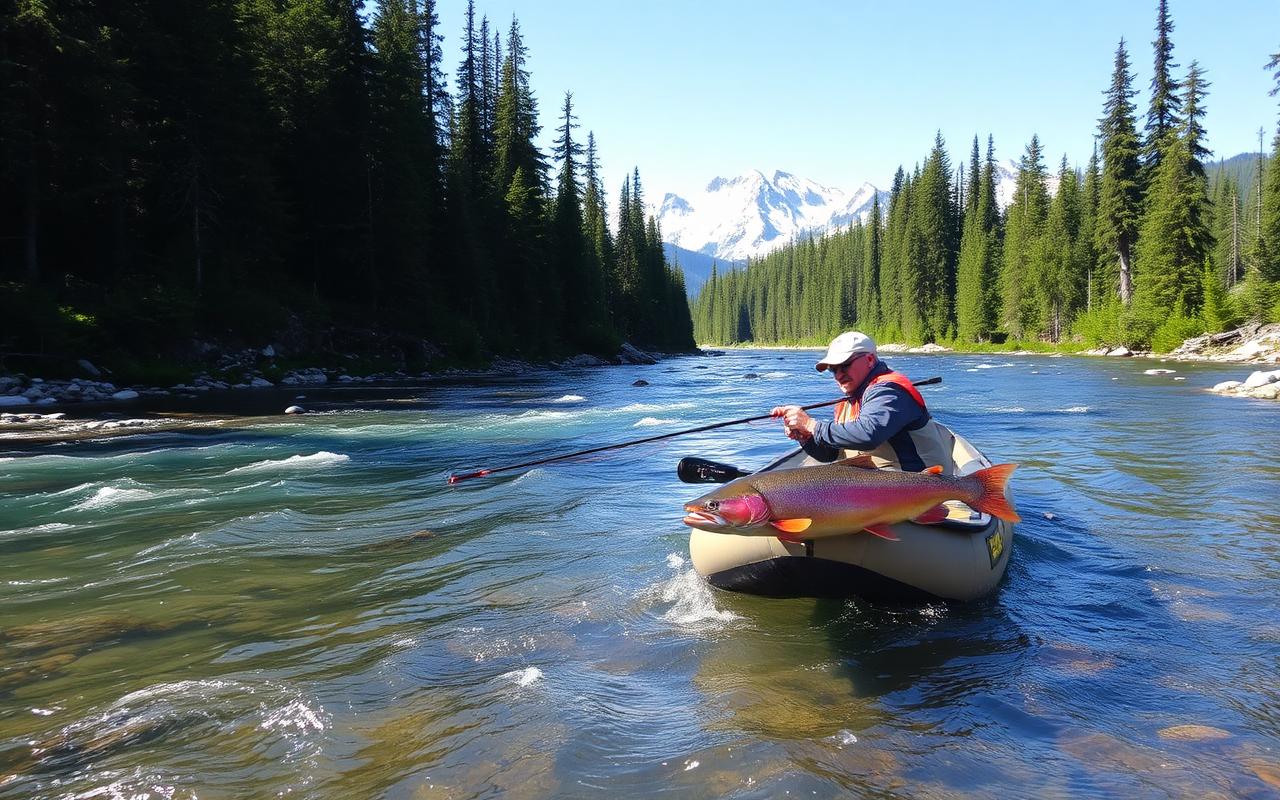
Alaskan freshwater fisheries are driven entirely by the Pacific salmon run calendar. Rainbow trout, char and grayling feed on salmon eggs and flesh, producing fish sizes that interior rivers cannot support.
Alaska occupies a particular place in the fly angler's imagination, and unusually for a famous destination it mostly deserves it. The scale is genuine: five species of Pacific salmon, rainbow trout that grow on salmon eggs and flesh to sizes no interior river can produce, Arctic char, grayling, and sheefish, spread across a road system that touches a fraction of one percent of the state.
Understanding the salmon calendar
Everything in Alaskan freshwater is governed by the salmon run calendar, because the salmon are not only a target species but the food supply that drives the trout fishery. Get the calendar wrong and you will be in the right river at the wrong month.
- King (Chinook): late May through July. Largest, hardest, and increasingly restricted; check current regulations, which change year to year and often mid-season.
- Sockeye (Red): June and July. The great numbers run, and the primary driver of the egg-drop that follows.
- Chum: July and August. Powerful, aggressive on a fly, and under-appreciated.
- Pink: July and August in even or odd years depending on the drainage; enormous numbers in run years.
- Silver (Coho): August into October. The best all-round fly-rod salmon in Alaska — aggressive, surface-willing, and beautiful.
Rainbow trout fishing tracks this cycle. Early summer means mousing and leech patterns before the eggs arrive. Mid-summer means egg imitations behind spawning sockeye. September and early October is the trophy window, when rainbows are heavy on a summer of protein and flesh patterns come into their own.
Lodge, float, or road
Three fundamentally different trips exist under the word 'Alaska'. A fly-out lodge is the premium version: a base with daily float-plane access to different drainages, guides, meals, and no logistics on your part, at a price that is genuinely high. A multi-day raft float — put in by plane, take out days later downstream — is the immersive version: fewer comforts, more solitude, and the best chance of water nobody has fished that week. And the road system, from the Kenai Peninsula to the Parks Highway, gives independent anglers real access at modest cost, at the price of sharing it.
First-time visitors consistently underestimate how good the road-system fishing can be if timed well and fished early in the morning, and consistently underestimate how much a fly-out lodge simplifies a week when weather closes in.
Tackle for big water and big fish
Bring more rod than you think. A 6 or 7-weight for trout and grayling, an 8-weight for silvers and general work, and a 9 or 10-weight if kings are on the itinerary. Two rods per weight class if you can — replacements do not exist in the bush. Reels need sealed drags and 150 to 250 yards of backing.
Lines: floating for mousing and egg work, and a set of sink tips or a full intermediate for swinging streamers to salmon in deeper runs. Leaders are short and stout by trout standards — 0X to 3X fluorocarbon depending on species and clarity. Bring far more egg patterns, flesh flies, articulated leeches, and mouse patterns than you expect to use, plus heavy hooks that will not straighten under a chrome silver.
Bears, and how to behave
You will see brown bears, frequently at close range, and they are fishing the same runs you are for the same reason. The rules that keep everyone safe are simple, unglamorous, and non-negotiable: fish in groups, talk loudly and constantly in brushy areas, never approach a bear for a photograph, never stand between a sow and cubs, and never keep a hooked salmon that a bear has expressed interest in — break it off and move.
Carry bear spray in an accessible chest holster, not in a pack, and know how to deploy it. Follow your guide's instructions instantly and without debate. Camp food and fish handling protocols on a float trip are strict for good reason; a habituated bear is eventually a dead bear.
Weather, insects, and comfort
Alaskan summer weather is cool, wet, and variable. Plan on rain gear that genuinely works, layered merino, waders that fit over layers, and dry bags for everything. Mosquitoes and white-sox in June and July are formidable in the interior; a head net weighs nothing and will save your temper.
Daylight is a gift and a trap. In June you can fish twenty hours and often will. Guides and lodge staff will tell you to sleep anyway, and they are right — a week of exhaustion is the most common self-inflicted problem on Alaskan trips.
Regulations and conservation
Alaska's fisheries are actively managed, and regulations change in-season by emergency order, especially for king salmon. Read the current regulations for your specific drainage before every trip and check for emergency orders on arrival. Single-hook and no-bait restrictions are common; some waters are fly-fishing-only; some are closed entirely in some years.
Handle rainbows and char as the long-lived, slow-growing fish they are: keep them wet, use a rubber net, and skip the trophy lift when water is warm. Sockeye that have entered fresh water to spawn should be left alone as much as possible; flossing spawning fish is neither fly fishing nor good for the run.
What the trip actually feels like
The reason anglers return to Alaska annually is not the fish count. It is standing in a clear river in a valley with no road, watching sockeye by the thousand push upstream past your legs while a rainbow the length of your forearm holds behind them, and understanding for the first time what an intact salmon ecosystem is. Most of the temperate world had this once. Very little of it still does.
Budget accordingly, book early — good lodges and good weeks sell out a year or more ahead — and go while the calendar you planned around is still the calendar the fish are keeping.
September is the trophy rainbow window. Flesh patterns and articulated leeches behind spent salmon produce the largest fish of the year, in the emptiest weeks of the season.
Frequently Asked
- When should I go?
- June-July for sockeye and kings, August-September for silvers, September-October for trophy rainbows.
- Lodge or float trip?
- Fly-out lodges simplify weather and logistics; raft floats deliver solitude and unpressured water at more effort.
- How dangerous are the bears?
- Manageable with discipline: fish in groups, make noise, carry accessible bear spray, never contest a fish with a bear.
- What rods do I need?
- A 6-7 weight for trout, an 8 for silvers, and a 9-10 if kings are on the itinerary — with spares.