Streamer Fishing for Big Browns: The Long Rod, the Big Fly
Sink tips, articulated flies and the mileage mindset that produces the largest trout in the river.
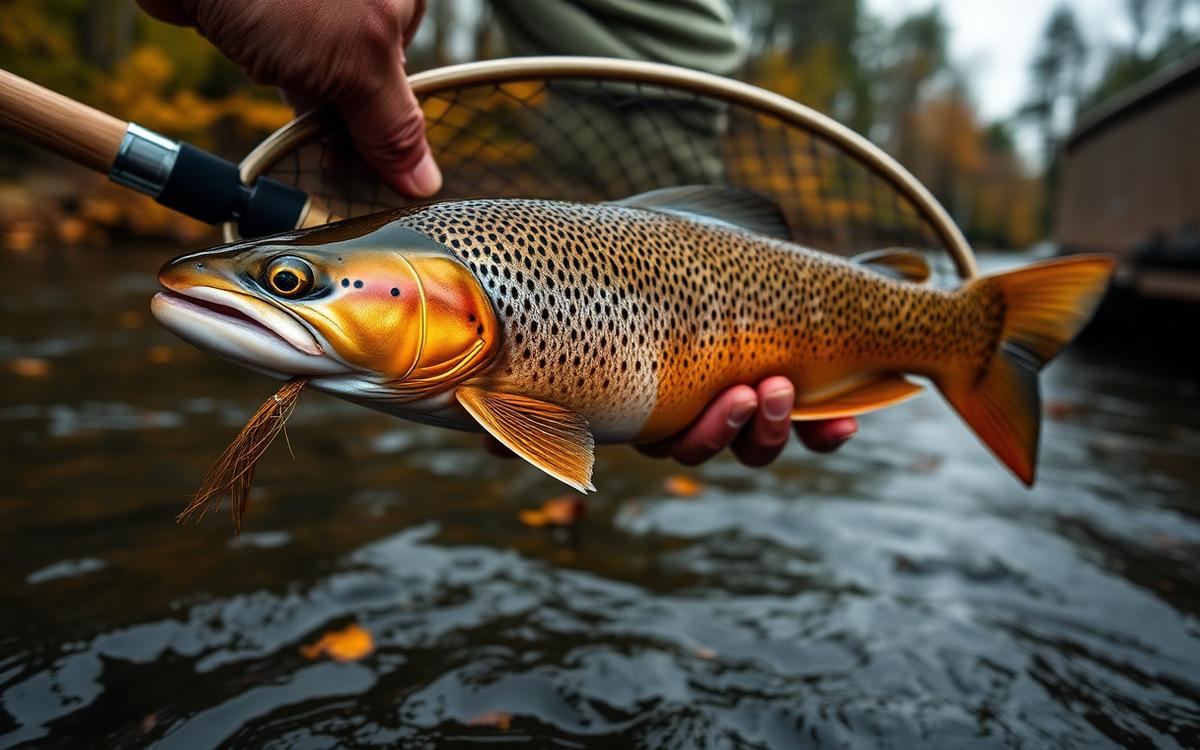
Trout over twenty inches shift diet toward baitfish and crayfish. Streamer fishing targets these fish directly, trading numbers for the chance at trophy trout.
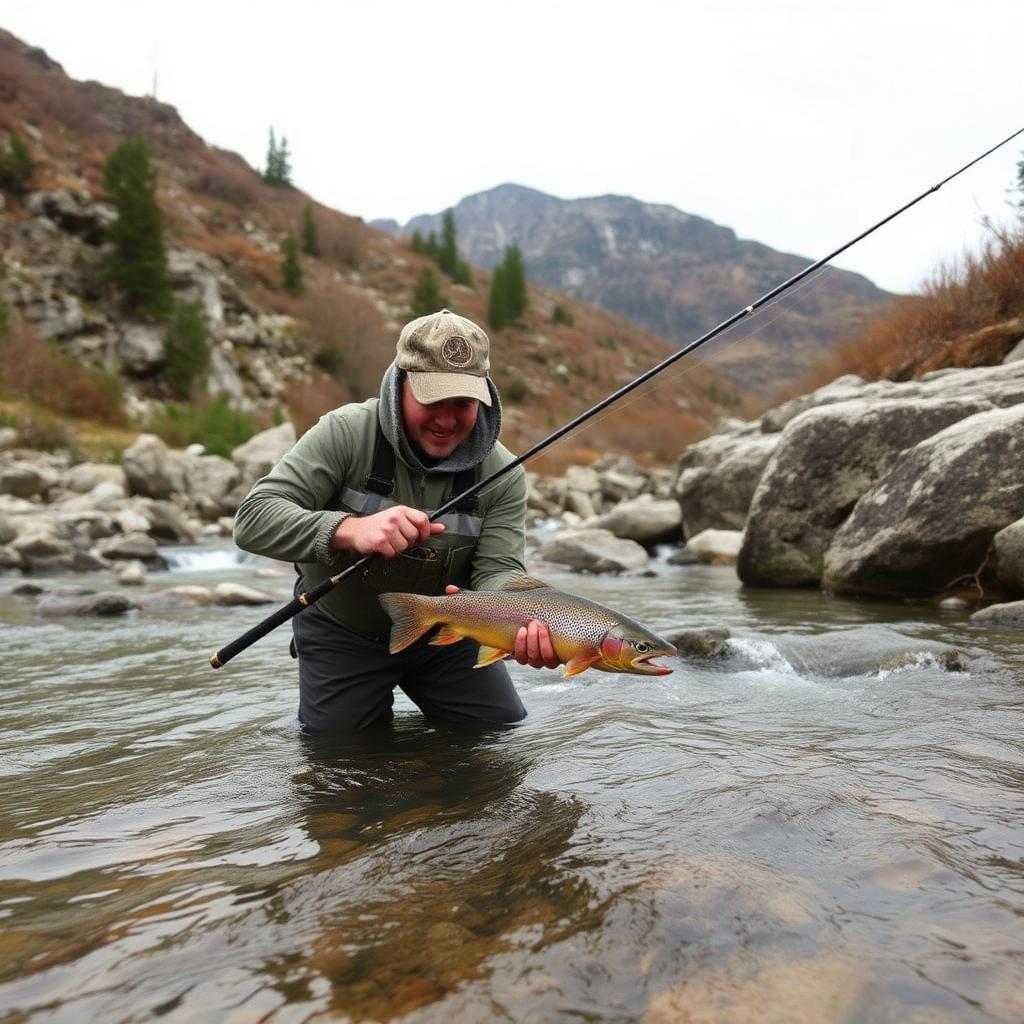
Streamer fishing is the loudest, most physical form of fly fishing for trout. Big flies, heavy sink tips, hard strikes, and the largest fish in the system all belong to the streamer angler. It is also the fastest way to burn out on a river — cover water aggressively, and if a big brown does not eat, keep moving.
Why streamers work on big fish
Trout over twenty inches have largely stopped eating tiny mayflies. Their bodies demand calories, and the most calorie-dense prey in a river is another fish — sculpins, minnows, small trout, crayfish. A streamer imitates that prey. The largest trout in any given watershed are almost always caught on streamers or on live baitfish, not on dry flies.
Rod and line setup
Use a 6 or 7-weight rod with a fast action to handle big flies. Match with a floating line for shallow water, a versatile 10-foot sink-tip line (type 3 or type 6) for most streamer situations, and a full sinking line for deep, slow pools. A short, stout leader — 4 to 6 feet of 0X or 1X fluorocarbon — turns over heavy flies and stands up to abrasion.
Flies that produce
A working streamer box contains articulated patterns (Sex Dungeon, Circus Peanut), classic streamers (Woolly Bugger, Muddler Minnow, Zoo Cougar), and a few sculpin patterns in olive, black, and natural. Colors: black or olive for low light and stained water, natural sculpin for clear water, white or yellow for aggressive fish and heavy overcast.
Presentation: swing, strip, dead drift
The swing — cast across and slightly downstream, let the current tension the line — is the traditional Atlantic salmon and steelhead method that also produces trout. The strip retrieve — cast to structure and pull the fly back in short erratic jerks — imitates a fleeing baitfish and triggers aggression. Dead-drifting an unweighted streamer under an indicator is a subtle, underrated method for pressured water.
Cover water, then cover more
Streamer fishing rewards mileage. A big brown that will eat a streamer often eats on the first or second cast; if it does not, moving on is more productive than working the same water. Guides on famous streamer rivers routinely cover four to eight miles of water in a day.
The eat
Streamer strikes are unmistakable — a heavy pull, a flash of gold, sometimes a boil that leaves the surface torn. Do not trout-set. Strip-set: pull the line hard with your line hand while keeping the rod low. This drives the hook into the corner of the jaw and, unlike a rod set, keeps the fly in the water if the fish misses.
When conditions favor the streamer
Rising, slightly stained water; falling barometer before a storm; low light of dawn and dusk; overcast fall days with browns pre-spawn — these are the windows when big trout are actively hunting. Blue-sky midday in July is the least productive time to swing a streamer, though pre-dawn and post-sunset windows still produce.
Streamer fishing is not for every day, and it is not for anglers who need constant action. But for the chance at a fish that will change your season, there is no more direct path.
The best streamer window is often the two hours before a front moves in. Watch the barometer and fish aggressively when it starts to drop.
Frequently Asked
- Do I need a dedicated streamer rod?
- A 6 or 7-weight fast-action rod handles the job much better than a 5-weight. Worth the additional purchase once you commit.
- Strip set or trout set?
- Strip set, always. A rod set on a streamer pulls the fly out of a fish's mouth.
- How fast should I retrieve?
- Vary constantly — pause, twitch, long strip. A dead-drift streamer followed by a sudden strip often triggers the hardest strikes.
- What color when in doubt?
- Black in low light or stained water. Olive natural in clear water. Yellow or white in aggressive summer conditions.