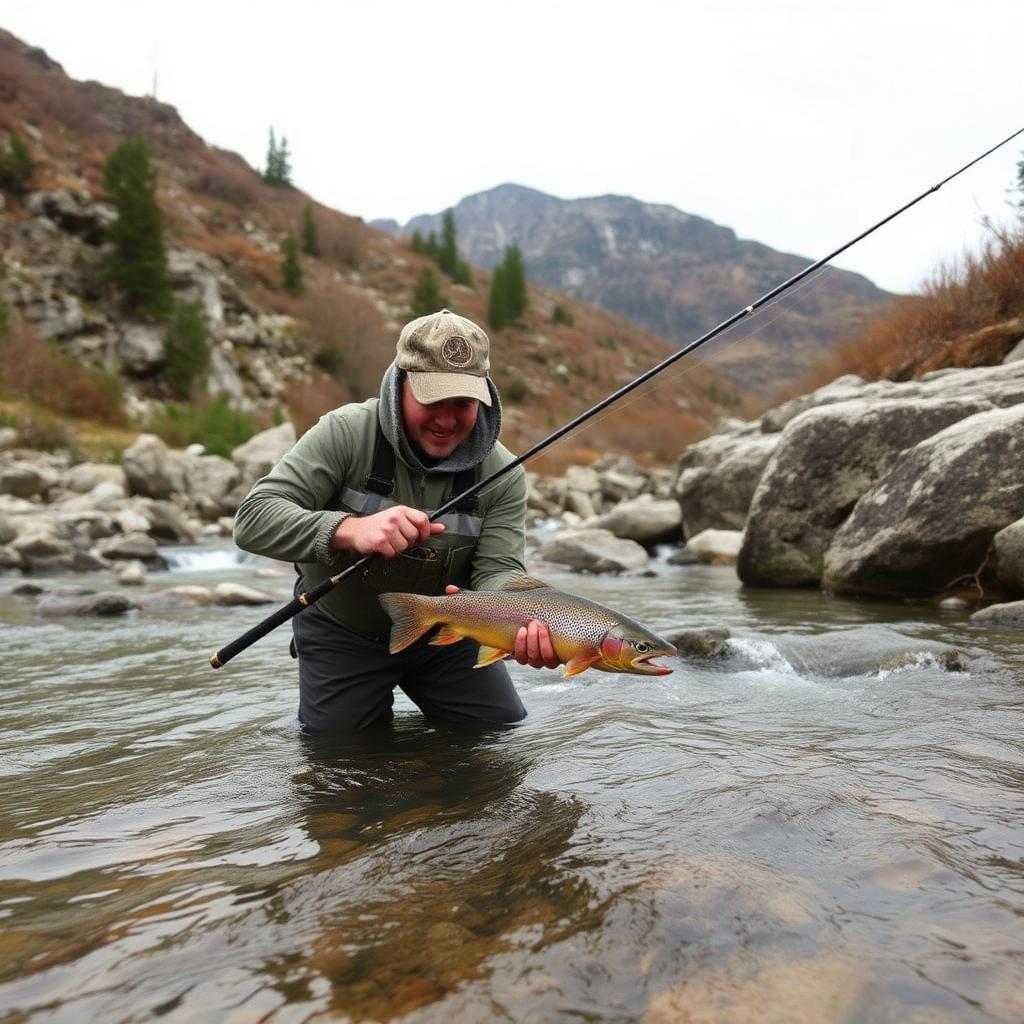
Spey Casting: The Two-Handed Discipline
Skagit vs Scandi, the D-loop, and the swung fly tradition that dominates steelhead and Atlantic salmon.
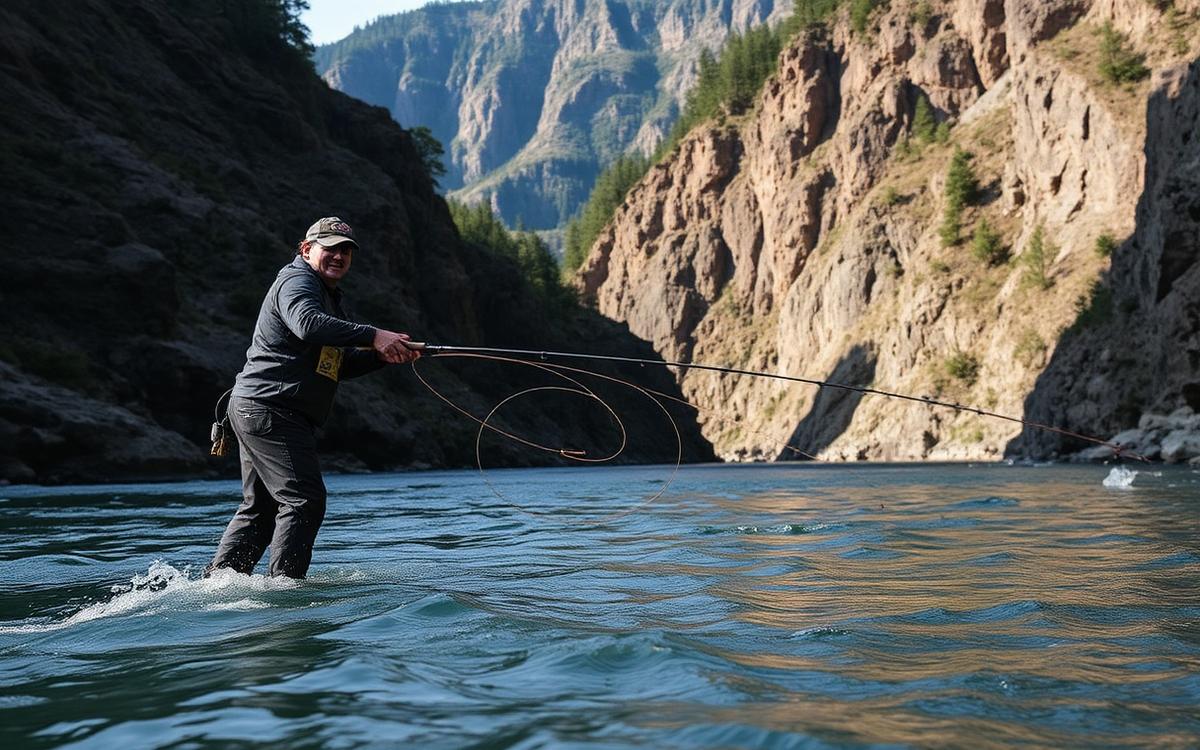
Spey casting evolved in 19th-century Scotland to cover wide salmon rivers where a single-hand overhead cast could not reach. Modern trout spey has adapted the technique to smaller rods and smaller water.
The two-handed spey rod is a specialized tool built for one job: casting long distances on large rivers where a normal single-handed cast cannot deliver the fly. Steelhead, Atlantic salmon, and Pacific salmon anglers have used spey for over 150 years; in the last two decades, trout spey has emerged as a distinct discipline of its own.
What a spey cast actually does
A spey cast never takes the line behind the caster. Instead, it uses the water's tension on the line to load the rod, forming a D-loop of line beside and slightly behind the caster before firing the line forward. This means you can cast in tight quarters with brush or a canyon wall behind you, and you can cover 100+ feet of water without traditional false casting.
Two-handed rod anatomy
A spey rod is 12 to 15 feet long, built to be cast with both hands. The upper hand pulls, the lower hand pushes — the two-hand mechanics distribute effort and make long-day casting sustainable. The rod is line-rated in grains, not conventional weights: a Skagit head or Scandi head of the correct grain weight is essential to make the rod perform.
Skagit vs Scandi vs long-belly
Skagit lines are short and heavy — designed to lift heavy sink tips and big flies with minimum casting room. Ideal for winter steelhead and streamer work. Scandi lines are longer and lighter — designed for delicate presentation of smaller flies with floating tips. Ideal for summer steelhead, Atlantic salmon, and trout spey. Long-belly lines require more room but offer the most elegant traditional presentation.
Core casts: the switch, the double, the snake
The four fundamental spey casts are the switch cast, the single spey, the double spey, and the snap-T (or snake roll). Each is a solution to a specific combination of wind direction and current direction. A complete spey caster has all four and knows which to use in any given lie.
The swing is the presentation
Nearly all spey fishing is presentation by swing: cast across and downstream, mend to control depth, and let the current carry the fly across the run in a slow arc. The take usually comes as the fly turns at the end of the swing — a hard, unmistakable pull. Do not set the hook; let the fish turn on the fly and set itself.
Trout spey: the modern movement
Compact 11-foot 3 or 4-weight two-handers have opened spey casting to trout anglers. A trout spey rod excels at swinging soft-hackles and small streamers through classic runs — a highly effective technique that also happens to be one of the most physically pleasant ways to spend a day on the water.
The learning curve
Spey casting is not intuitive for single-hand casters. A two-hour lesson from a certified spey instructor will save you months of frustration and ingrained bad habits. Videos help supplement, but the tactile feedback of an instructor's coaching cannot be replicated online.
A spey rod, once mastered, becomes a tool of quiet efficiency. You cover water twice as fast, you do not lift a heavy single-hand rod all day, and you place the fly exactly where you intend, every time.
Two hours with a certified spey instructor is worth more than a season of self-teaching from YouTube. The physical mechanics need direct coaching feedback.
Frequently Asked
- Skagit or Scandi first?
- Skagit if you fish streamers and sink tips. Scandi if you fish smaller flies and floating tips. Both eventually, if you commit.
- Can I trout-spey with a normal rod?
- Dedicated 11-foot 3 or 4-weight trout-spey rods perform far better. The single-hand rod is a poor tool for the job.
- Do I need a lesson?
- Yes. Spey casting mechanics are not intuitive; a lesson prevents months of ingrained bad habits.
- Where do I fish spey around trout?
- Larger tailwaters like the Bighorn, Delaware, and Missouri all fish beautifully with a trout-spey rod.