Pike and Musky on the Fly: Big Water, Big Flies, Long Odds
Heavy tackle, articulated streamers, the figure eight, and the handling standards these apex predators demand.
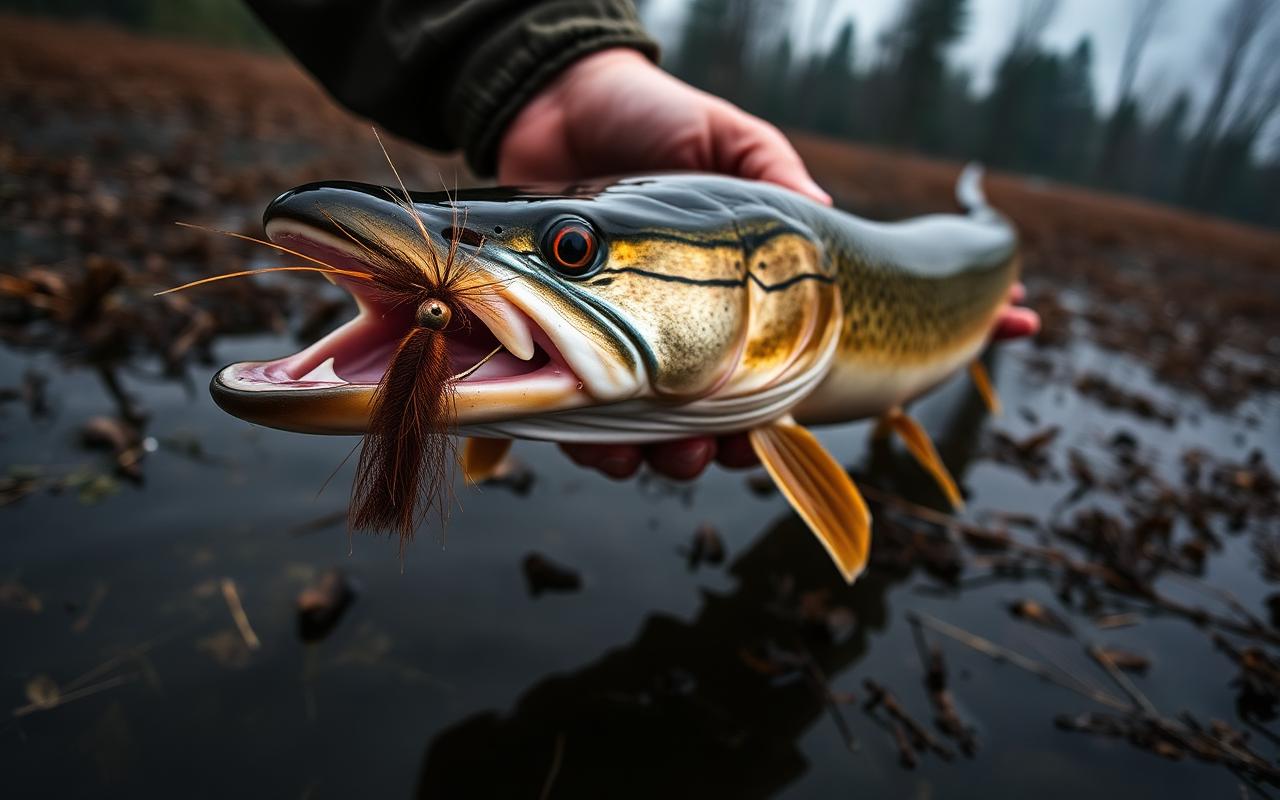
Northern pike and muskellunge are ambush predators of northern lakes and rivers. Fly anglers pursue them with 9 to 12-weight rods and articulated streamers up to fourteen inches, a discipline closer to saltwater fishing than to trout angling.
Fly fishing for pike and musky is not trout fishing with bigger flies. It is a different sport that happens to use a fly rod: heavier tackle, fewer casts, longer odds, and a payoff measured in seconds of violence rather than hours of technical drift. Anglers who cross over from trout water often quit in the first season because they misunderstand what they signed up for. The ones who stay tend never to go back.
The commitment problem
Northern pike are relatively cooperative predators. On a good day in shallow spring water you may move a dozen fish. Musky are the opposite — the traditional figure of a thousand casts per fish is not folklore. A serious musky angler can fish three full days, throw six thousand casts, raise four fish, and land none. Everything about the gear, the technique, and the mindset follows from accepting that arithmetic in advance.
This means physical preparation matters. Casting a ten-inch articulated fly on a 10-weight for eight hours is athletic work. Anglers who do it regularly build a casting stroke that uses the whole body, take frequent short breaks, and fish from a boat where the platform lets them reset without wading fatigue.
Tackle that survives
- Rod: 9-weight for pike, 10 to 12-weight for musky. Fast action with enough butt power to turn over a heavy fly and drive a hook into bone.
- Line: short aggressive heads in the 350-500 grain range. Intermediate for most conditions, floating for topwater, fast sink for deep autumn fish.
- Leader: short, six to nine feet, heavy butt down to 40-60lb fluorocarbon, then a bite guard.
- Bite guard: non-negotiable. Either 30-40lb single-strand titanium or heavy knotable wire. Fluorocarbon alone will be sheared by pike teeth eventually.
- Hooks and tools: strong wide-gape hooks, a long-nose plier, a jaw spreader, a hook cutter, and a cradle or oversized rubber net.
Flies and what they are actually doing
The modern pike and musky fly is an articulated multi-section streamer, six to fourteen inches long, built from bucktail, synthetic fibre, and a strategically placed rattling or wobbling head. It is designed to push water rather than merely look like a fish. Predators locate prey with the lateral line before they see it, and a fly that displaces water at the right frequency is doing most of the work before the fish is close enough to make a visual judgment.
Build a box around three profiles rather than thirty patterns: a wide-bodied water-pushing fly for stained water, a long slender baitfish for clear conditions and pressured fish, and a topwater diver or popper for warm calm mornings. Colour matters less than contrast — dark flies for low light and stained water, light or natural for clear bright conditions, and one chartreuse-and-white for when nothing works and confidence needs a reset.
Where they live
Pike hold in structure: weed edges, drop-offs beside shallow bays, drowned timber, the mouths of feeder creeks. In spring they push extremely shallow into the first bays that warm, and a floating line with an unweighted fly over two feet of water is often the whole game. Through summer they slide deeper and cluster around cold-water inflows and weed lines. In autumn they feed hard and move back shallow again.
Musky use similar structure but relate more to current seams in river systems and to specific rock or wood features in lakes. River musky fishing has become the fastest-growing branch of the sport because it concentrates fish into predictable lies rather than spreading them across thousands of lake acres.
The retrieve, and the figure eight
Cast, let the fly settle to your intended depth, and retrieve with long fast strips using the rod tip low and pointed straight down the line. Vary rhythm constantly. The most common taking pattern is a strip-strip-pause sequence in which the fly stalls and glides sideways — that stall is the moment a following fish commits.
Then comes the part that trout anglers habitually skip and that accounts for a large fraction of all musky caught on fly: the figure eight. When the fly reaches the boat, do not lift it out. Sink the rod tip into the water and sweep the fly through a wide, deep figure eight beside the boat, keeping speed up and turns broad. Fish that followed the fly unseen for thirty feet frequently eat on the second or third turn. Every cast ends with a figure eight, all day, without exception — including the last cast when you are tired and certain nothing followed.
The set and the fight
Strip-set hard and repeatedly. A pike's or musky's mouth is bone and cartilage, and a soft set leaves the hook sitting on a hard surface. Set with the stripping hand, keep the rod low, and set again once the fish is moving. Trout-style rod-lift sets are the number one cause of lost fish on the first day of anyone's pike career.
Fight the fish hard and briefly. These are apex predators with a poor tolerance for extended exhaustion in warm water. Apply real pressure with the rod low and to the side, steer away from prop, anchor rope, and net handle, and get the fish into the cradle as fast as the tackle allows.
Handling with respect
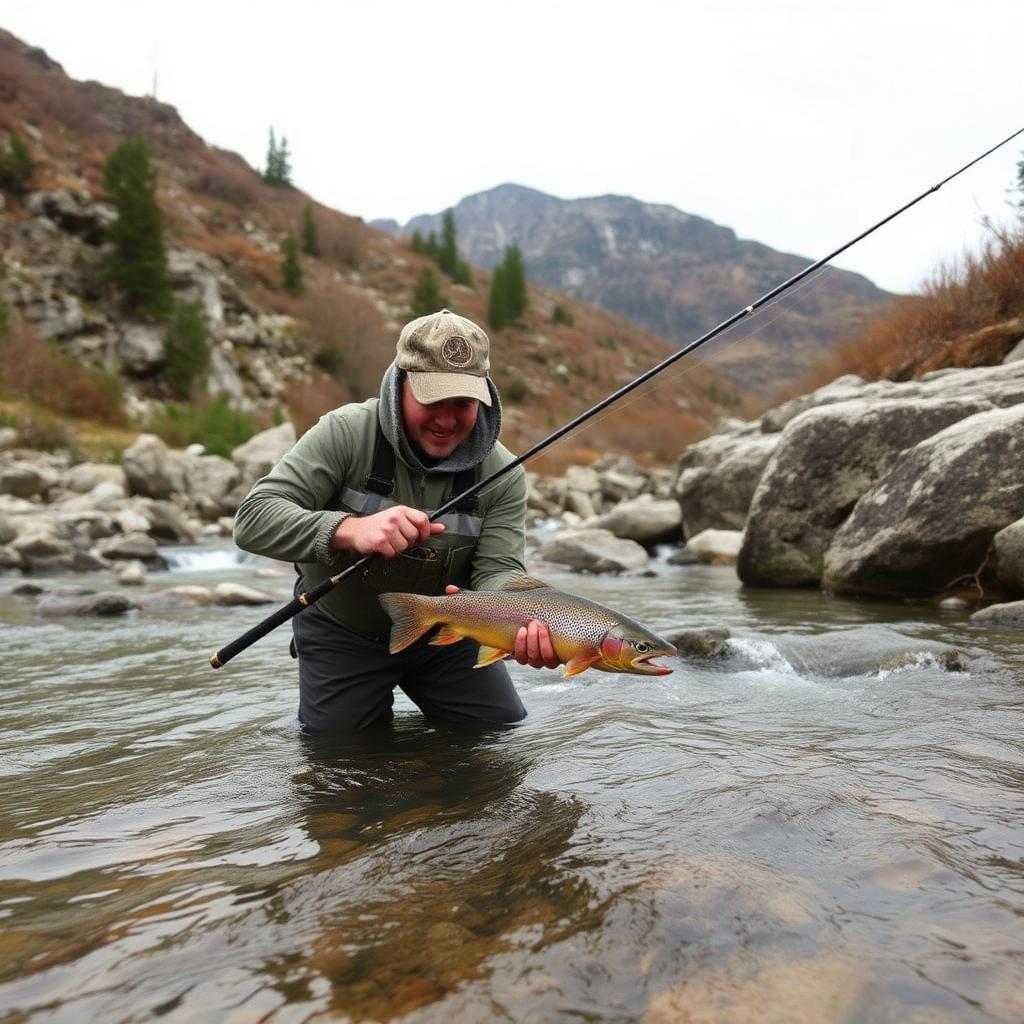
This is where the sport earns or loses its reputation. Pike and musky are large, long-lived, slow-growing fish, and a badly handled musky often dies out of sight an hour after release. Use a large cradle or oversized rubber net and leave the fish in the water in the net while you prepare. Support the fish horizontally with a hand under the pectoral region; never hold it vertically by the jaw. Use a jaw spreader and long pliers so your hands stay out of the teeth. Cut the hook if it is deep — a cut hook is a cheap loss.
Keep the fish out of water for less than ten seconds, and skip photos entirely when water temperature is above the mid-seventies Fahrenheit. Revive with the fish facing into current or gentle boat movement until it drives out of your hands under its own power. In many musky fisheries the entire population is small enough that individual fish are recognised year after year; every release genuinely matters to the fishery's future.
Managing the odds
Success in this sport is measured in encounters, not landings. Keep a log: date, water temperature, wind, barometric trend, fly, structure type, and every follow. Within a season the log will show you patterns that no amount of general advice can — that your water fishes best on a falling barometer three days after a warm rain, that your best fly is one you nearly retired, that your morning hours are worth double your afternoon hours.
And accept the blank days as the price of admission. A day when a fifty-inch shadow materialises behind your fly, follows it into the figure eight, and turns away at arm's length is not a failed day. It is the reason the sport exists.
Never skip the figure eight. A meaningful percentage of musky caught on fly eat within a rod's length of the boat, on a fly the angler was about to lift out of the water.
Frequently Asked
- Do I need a wire bite guard?
- Yes. Both species will eventually shear fluorocarbon. Use single-strand titanium or knotable wire.
- How many casts per fish?
- Pike can be generous. Musky average famously poor odds — hundreds to a thousand casts per fish is realistic.
- Best time of year?
- Spring shallows and autumn feeding periods are the two peaks. Midsummer fish go deeper and get harder.
- How should I handle a big musky?
- In a large cradle in the water, supported horizontally, out of water under ten seconds, and no photos in warm water.