Carp on the Fly: The Hardest Sight Fishing in Your Own City
Tailing fish, one-shot presentations and the urban flats fishery that trout anglers keep underestimating.
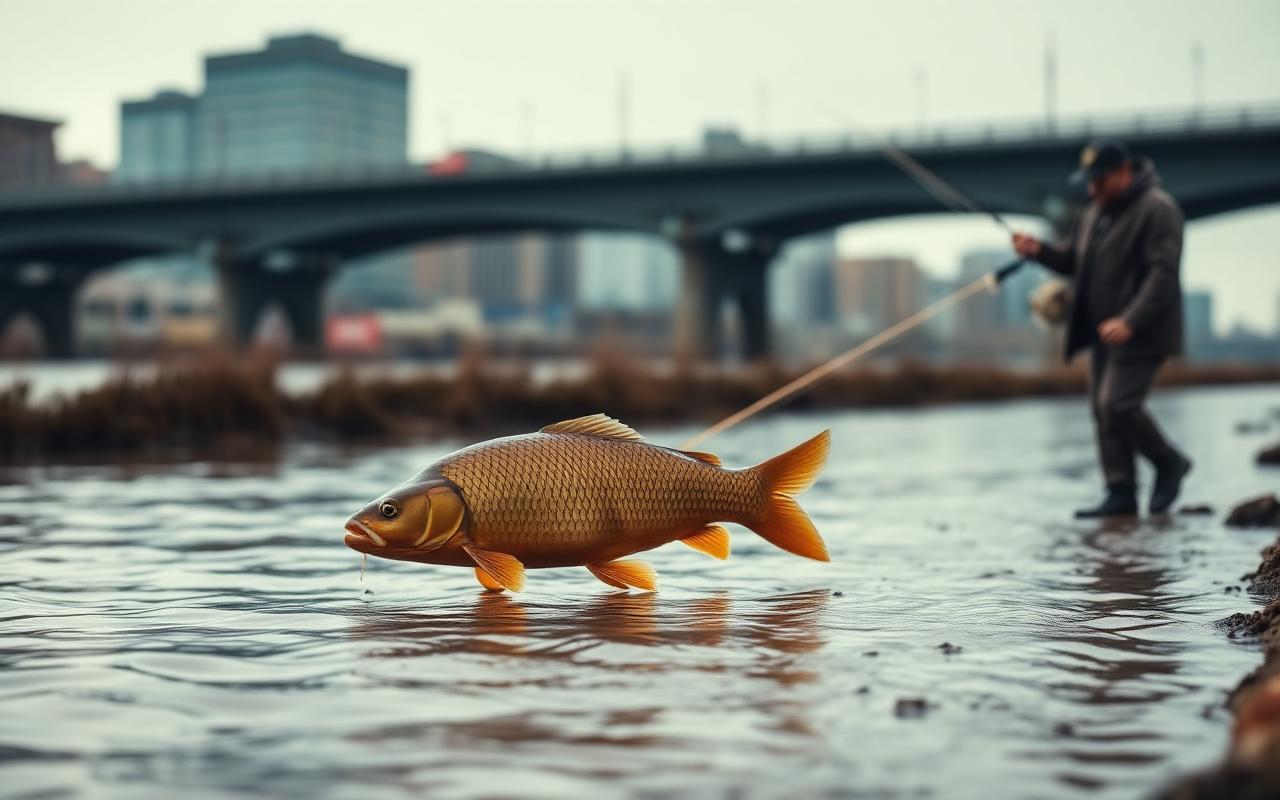
Common carp inhabit warm, often urban water across North America and Europe. In clear shallows they behave like flats fish, feeding head-down on invertebrates and rejecting anything presented poorly, which has turned a formerly ignored species into a serious fly-rod target.
Carp were the joke fish of American fly fishing for most of a century. They were the thing you cast to when the trout were off, the invasive vacuum cleaner of warm municipal water, the fish nobody photographed. That view has quietly collapsed. Anglers who have spent a season stalking common carp in a city river will tell you the same thing: pound for pound, in clear shallow water, they are the most demanding sight-fishing target on the continent that does not require a plane ticket.
Why carp are hard
A carp in eighteen inches of water is a permit with a smaller travel budget. It has excellent eyesight in the near field, exceptional hearing through the lateral line, and a mouth designed for inhaling food off the bottom rather than chasing it through the water column. Every failure mode in fly fishing is punished here. A heavy fly landing eighteen inches from the fish is a blown shot. A false cast whose shadow crosses the fish is a blown shot. A wading step that grinds a single piece of gravel is a blown shot. There is no current to hide a clumsy presentation and no hatch to make the fish reckless.
The compensation is that carp are large, common, and often visible. On a good morning in July on any midwestern or western urban river, you may see forty fish and get twelve realistic shots. Twelve realistic shots at eight-to-fifteen-pound fish is a better day than most trout rivers offer in a season.
Reading carp behaviour
The single skill that separates people who catch carp from people who cast at carp is behaviour reading. Not every visible carp is a catchable carp, and casting to the wrong one costs you the whole flat.
- Tailing fish — head down, tail breaking the surface, actively rooting in silt. These are feeding and catchable. Highest-percentage target by a wide margin.
- Clooping fish — sipping something off the film with an audible pop. Catchable with a small dry or a suspended nymph, but hyper-focused on a narrow food item.
- Cruising fish — moving steadily with fins level, not feeding. Low percentage. You need to lead them by several feet and let the fly sit.
- Sunning fish — motionless near the surface, fins slack. Effectively uncatchable. Leave them alone; hooking their neighbours is easier.
- Wakes and mud clouds — a fresh mud plume with a fish still working the edge of it is the same as a tailing fish and just as good.
Rig and flies
A 6-weight is the minimum and an 8-weight is the practical standard, not because carp fight so violently but because you are throwing weighted flies into wind, at distance, with one backcast, and you need a rod that can pick up and redeliver forty feet of line without four false casts. A weight-forward floating line with a short aggressive head loads quickly at close range. Leaders run nine to twelve feet down to 3X or 2X fluorocarbon — carp are not leader-shy in the way a spring creek trout is, but they are drag-shy, and heavier tippet lets you steer a hooked fish away from structure.
Flies fall into three families. Bottom-crawling patterns — hybrids of a crayfish, a nymph, and a bonefish fly, usually rubber-legged, size 6 to 10, with bead-chain or small dumbbell eyes — cover ninety percent of tailing situations. Softer suspended patterns like a small unweighted damsel or a black soft-hackle cover fish that are looking up or working mid-column. And in early summer, when cottonwood seeds or mulberries drop, a foam imitation of that exact item fished dead-still is the most reliable carp fly in existence.
The presentation that works
Forget everything trout fishing taught you about drift. Carp fishing is a delivery-and-drag game. The classic sequence: identify a tailing fish, judge its direction of travel, and land the fly two to three feet ahead of it and slightly beyond, with the fly touching down softly enough that it does not spook the fish. Let it sink to the bottom and sit dead. When the carp's head comes within a body-length of the fly, give it one very small drag — an inch, no more — so the fly puffs and moves. That movement, at that moment, is what triggers the eat.
The take is subtle and visual. The fish tips down, its tail rises, the leader twitches a fraction. You will not feel it. Strip-set the instant the fish tips onto the fly. Trout-style lifted rod sets pull the fly out of the mouth and put you back at zero.
Playing and landing
The first run of a good carp is genuinely fast and long — a hundred feet is routine, and your backing knot will see daylight. Let it run with a light drag and palm carefully; carp rarely break off on the first run but frequently break off when a panicked angler clamps down. Steer, do not haul. Once the fish is off its first run, use lateral pressure to keep it away from pilings, submerged shopping carts, and the weedbeds it will make for. Large rubber nets are essential; carp do not tolerate being lipped and their weight makes handling hard on the fish.
Ethics in an urban fishery
Urban carp fisheries have unusual ethics. Carp are invasive in most North American water, and in some jurisdictions returning them is discouraged or illegal. Know your local regulation before you decide what to do with a fish. Where release is legal and normal, treat the fish as you would a wild trout — wet hands, brief handling, water-level photos. Where carp are actively removed as part of a native-species restoration program, cooperate with that program rather than freelancing.
Also treat the human environment carefully. These flats sit behind warehouses, under bridges, along bike paths and city parks. Access frequently depends on the goodwill of neighbours and municipal staff who have every right to close a gate. Park legally, carry out trash that is not yours, and do not climb fences. Urban fisheries are lost to angler behaviour far more often than to water quality.
A season plan
Carp fishing is a spring-to-fall pursuit with clear phases. Pre-spawn in late spring brings fish into shallow warm bays where they are aggressive but distracted. The spawn itself, when carp thrash noisily in shallow weeds, is unfishable — leave them to it. Post-spawn through midsummer is the golden window: hungry fish, tailing hard, clear water, long light. Late summer adds terrestrial and mulberry opportunities. Autumn fish feed heavily but move deeper as water cools, and by the time night temperatures fall consistently the flats go empty.
Give it three full outings before you judge it. The first is humbling, the second is instructive, and the third is usually when you finally connect — and discover that a nine-pound fish on a flat, hooked in six feet of visibility with a fly you tied for it, is exactly as good as anything a trout river has offered you.
Fish the first two hours of light in July. Carp tail hardest on a warming flat before boat traffic and wind arrive, and low sun angles let you see fish at twice the distance you can at noon.
Frequently Asked
- What rod weight for carp?
- A 7 or 8-weight. You need the ability to pick up and redeliver a weighted fly in one backcast, which a 5-weight cannot do.
- Do carp really refuse flies?
- Constantly. A carp will inspect and reject a fly that lands wrong, moves wrong, or arrives too close. Presentation matters more than pattern.
- Is it legal to release carp?
- It depends on jurisdiction. Carp are invasive in much of North America and some agencies discourage or prohibit release. Check local regulations first.
- Best single carp fly?
- A rubber-legged bottom-crawling pattern in size 6-10 with light dumbbell eyes covers most tailing fish.